Translated by BPS
From the Mount Tai Editorial Team
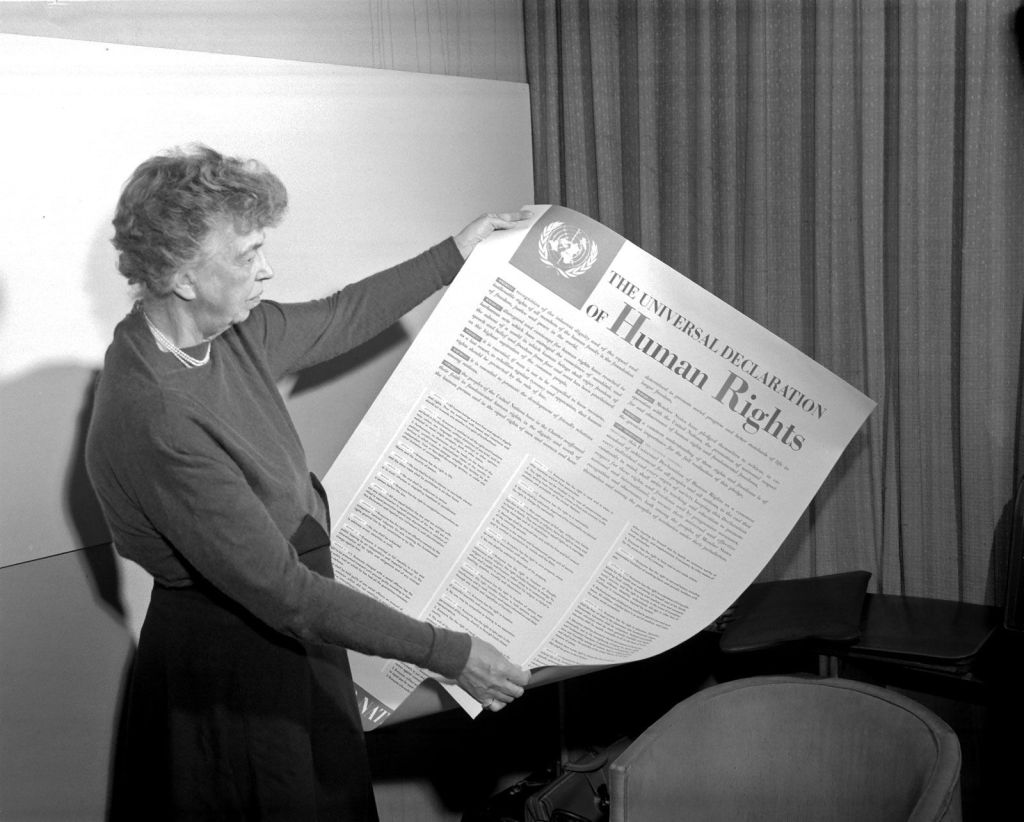
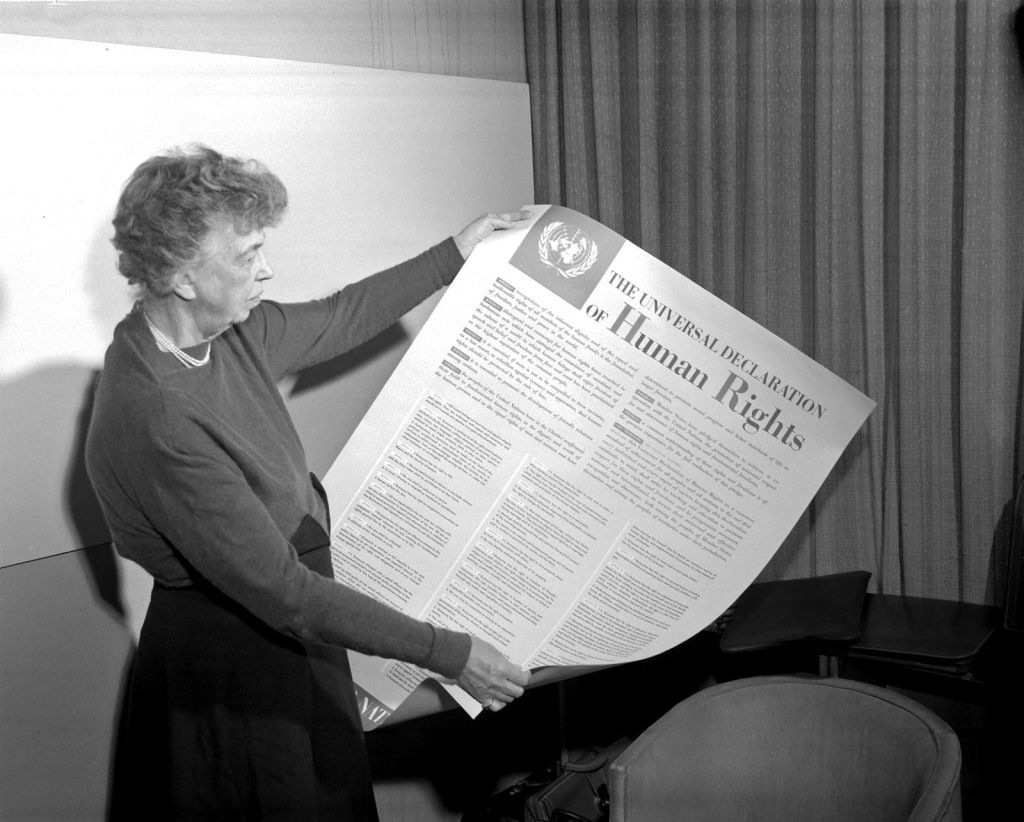
We are proud to share this translation of Vyshinsky’s two speeches criticizing the UN’s final draft declaration of human rights. At a time when the UN has completely exposed itself as a useless institution, and when the “rule of law” is flagrantly undermined across the world with the rise of various reactionary and fascist sections of the bourgeoisie, we see these speeches as quite potent in demonstrating a Marxist’s foresight on the matter from over 70 years ago. We encourage readers to think about Palestine, Sudan, Myanmar, the ICE detention centers in the United States, or any other flashpoint of reactionary violence against the working people taking place today as a direct consequence of the liberal idealism enshrined in international law all those decades ago.
Foreword from the Translator
The original transcription of the two speeches may be found on pages 367-390 in А.Я. Вышинский “Вопросы Международного Права и Международной Политики”, Государственное издательство юридической литературы, Москва 1951, and also in Красная звезда, 1948, выпуск №294, 295. To my best knowledge, no complete translation of these two speeches has existed until now, despite the arguably significant historical importance of the matters raised in these speeches.
The UN Digital Library offers a summary of the two speeches in documents with symbols A/PV.180 and A/PV.183 as part of the official records of the 3rd session of the General Assembly.
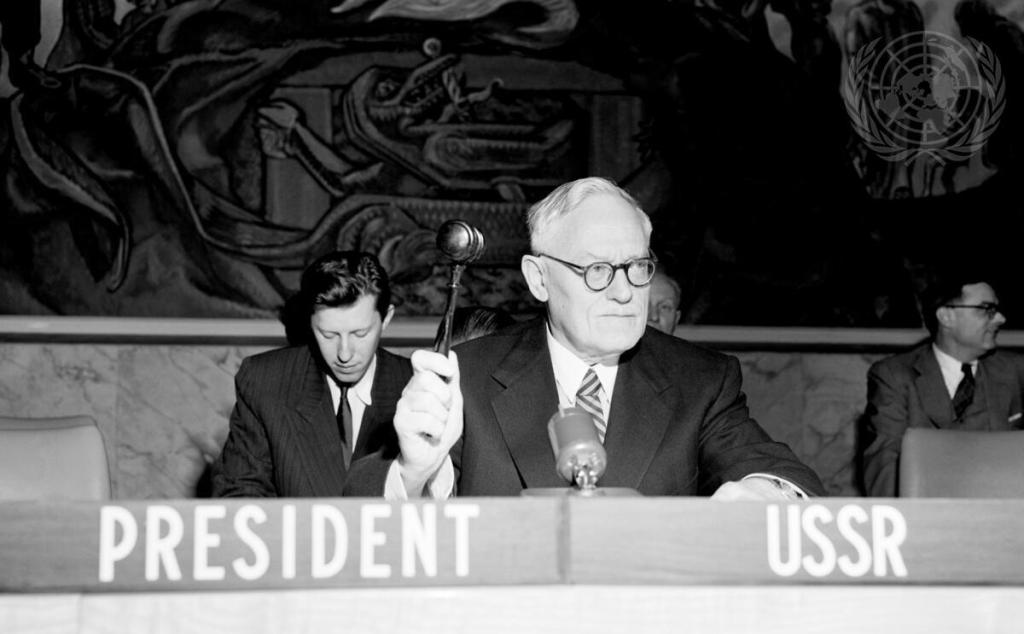
Speech at the 180th Plenary Meeting of the UN General Assembly, Thursday, 9 December 1948, Palais de Chaillot, Paris
1. Major Shortcomings of the Draft
As is well known, the representatives of the Soviet Union took an active part in the work of the Third Committee on the preparation of the draft Declaration of Human Rights, just as they had previously taken an equally active part in the elaboration of this question in the various bodies that dealt with this matter. It fell to the Third Committee to complete this work, which had been begun in Geneva, where in 1947 the initial draft of this Declaration was prepared, known as the “Geneva draft.”
Despite certain merits, this draft has a number of major shortcomings, the chief of which lies in its legalistic nature, and in lacking any measures whatsoever that could help implement the fundamental freedoms and human rights proclaimed in this draft. The Geneva draft, as is well known, was subsequently amended. Yet this, its fundamental shortcoming, remained, regrettably, unaddressed until the most recent period. This shortcoming was likewise not addressed during the preparation of the draft at the present session of the Assembly.
The legalistic nature of this draft, to which I have just referred, is expressed in the abstract construction of a number of articles devoted to highly important questions connected with human rights. Thus, Article 4 of the draft Declaration of Human Rights submitted for the consideration of the General Assembly reads: “Everyone has the right to life, liberty and security of person.” The abstract character of this article would appear to require no commentary. It is striking that the draft, in speaking of a question of such exceptional importance as the right of the human being to life, to liberty, to security of person, does not even attempt to specify the basic necessary measures a state should take — let alone guarantee — the exercise of these rights in practice. It was therefore entirely natural to attempt to introduce improvements into this article, to introduce into it such amendments as would eliminate this shortcoming.
The Soviet delegation attempted to do just that. It proposed an amendment to Article 4 of the Third Committee’s draft: “The state must ensure for every person protection from criminal attacks upon them, ensure conditions preventing the threat of death from hunger and from exhaustion…” and so on. This amendment would have tackled the very issue set out in the article. Regrettably, the Third Committee rejected it, despite its serious and significant improvement of the text.
This amendment did not gain the support of the majority of the Third Committee, and Article 4 of the draft Declaration therefore remained in its original form, with all its shortcomings.
I shall cite another example. The draft of the Third Committee contains Article 23, which proclaims the right to social security and to the enjoyment, as the article states, of the rights essential to human dignity and for the free development of one’s personality in the economic, cultural and social fields, through national effort and international cooperation and in accordance with the structure and resources of each state.
The article addresses a very important task, and one could only welcome the setting of this task. But does the draft resolve this task satisfactorily? The USSR delegation answers this question in the negative. From this followed the necessity of amending the wording given by the draft Declaration of Human Rights prepared by the Third Committee. Here there is a vast disparity between what the authors of this paragraph wished to express and what they were, in fact, able to express. We have no doubt that, even within the authors themselves, a struggle took place. On the one hand, they aspired to realise what the preamble calls—without sufficient grounds, in our view—an “ideal.” On the other hand, their ideology and political attitudes prevented them from developing a formula that would truly match the importance of the idea expressed in this article—an idea that has, regrettably, been expressed poorly and unsatisfactorily.
This article, it must be said, constitutes only a part of the article proposed by the Soviet delegation. But instead of adopting the entire article, of which these few lines are a part, the majority of the Committee chose another path. That which is most important, that which is most valuable, that which represents what is most essential in this article — the majority of the Committee cast aside and left only a scant little piece of this large and important paragraph, which sounds entirely different in the formulation of the delegation of the Soviet Union than in the draft of the Committee, where it has been turned into a pitiful remnant of a large but invisible object, absent from the draft.
The majority of the Third Committee rejected another, as I have said, more essential part of this proposal, which pointed to the duty of the state and society to take all necessary measures, including legislative ones, in order to ensure for every person a real opportunity to enjoy all the rights set forth in the Declaration. This was rejected, this was cast aside. And what remained? There remained a bare proclamation — that is, precisely that which constitutes the weakest aspect of this Declaration — there remained a tendency, a wish, an outcry, a slogan, but not an article, the kind of article that could inspire confidence that the goods proclaimed in this Article 23 will genuinely be ensured. All this has been discarded. What the article lacks is the main thing — namely, an indication that societies and states are obliged to take measures, including legislative ones, for the purpose of ensuring the possibility of the free development of the personality in the economic, social and cultural fields. All this, I say, has been discarded. What has remained is what is called in Russian fairy tales “the horns and the hooves”.[1]
The Soviet delegation proposed to adopt an article in which it would be stated that the social insurance of persons (here, the matter concerns social security and social insurance) working for hire, that is, workers and employees, ought to be carried out at the expense of the state of each country. Here the Soviet delegation grounded this problem in reality, identifying a concrete source of funding so that working people can enjoy the benefits of social insurance, the benefits of social security. It says: here is the source — the state; here is the source — the employers, who extract profit from the exploitation of working people’s labour. At this expense it is necessary to secure for the working person pension and other provision in the event of disability, old age, illness, etc.
It would seem that this is an entirely natural and concrete formulation of the question. Yet it met fierce resistance from the majority in the Committee, and that majority rejected this amendment as well. Meanwhile, if, in addition to the text which in itself raises no objections and which has found its way into the current draft of Article 23 of the Declaration of Human Rights, the draft Declaration had also included the above-mentioned proposals of the delegation of the Soviet Union regarding genuinely real, concrete, practical measures of social security — measures, if only morally binding — the draft would only have benefited from that.
Had these proposals been adopted, Article 23 would then have been concrete, showing the practical direction for implementing the key rights proclaimed by this Declaration.
Here is a second example of how the majority of the Third Committee disfigured an excellent thought and idea, and failed to cope with its task. To that path — the path onto which the Soviet delegation constantly tried to push the work of the Third Committee, the path of a concrete, positive resolution of the question of those recommendations, even if of a purely moral order, which ought to be given to other states so that they might follow it — it preferred[2] an abstract path, strewn with the flowers of florid phraseology that was more fitting in the eighteenth century and can no longer captivate anyone. For all these phrases and formulas of the French Revolution, the American Revolution, and the English Revolution of the seventeenth century have now faded, because real life has shown that behind these ringing formulas hides a cruel reality that shatters fetishes and illusions.
2. Against Fascist Propaganda
A third example. In the draft Declaration of Human Rights of the Third Committee, Article 20 states: “Everyone has the right to freedom of opinion and expression; this right includes freedom to hold opinions without interference and to seek, receive and impart information and ideas through any media and regardless of frontiers.” In this form the delegation of the Soviet Union could not accept the given article, could not recognise this article as satisfactory, could not recognise it as meeting those requirements that must be set when resolving the questions touched upon in this article.
Indeed, the first shortcoming of this article consists in the fact that it proclaims so-called freedom in general, the freedom to impart “information and other ideas.”
What ideas may be disseminated freely and without hindrance? The majority of the Committee answers this question: all kinds of ideas. The Soviet delegation answers this question: We cannot recognise this, for the “ideas” of fascism, of racial hatred, of national hatred, of sowing enmity between peoples, of incitement to a new war — we consider it unacceptable to disseminate such ideas, we cannot permit such “freedom.”
We consider it unacceptable to disseminate the so-called “ideas” of fascism, because we know from experience — for which we have paid with millions of lives of our children, our brothers, our fathers, our sisters, our mothers, our daughters. We know this from experience that cost our people torrents of blood, shed upon our land in the years of the Second World War.
We all know very well what this so-called freedom to disseminate fascist “ideas” led to, and we do not wish and will not permit a repetition of this experience. We will not allow the idea of freedom to be perverted by calmly contemplating how fascist propaganda will once again unfold — propaganda that has already now raised its head and will raise it higher when it sees this declaration, in which the right of free dissemination of all kinds of ideas (and hence, of fascist “ideas” as well) is proclaimed. No. We must stifle at the root this terrible propaganda of fascism, which attempted to drown peace-loving, democratic countries in blood. We will not be swayed from our position by demagogic cries and whining that human freedom, human rights, supposedly cannot be limited. No — one can, if this freedom is used to the detriment of the public good, the interests of the people.
One cannot permit people with burning torches to run freely through the streets of cities, preparing to set fire to our homes and destroy us. We do not recognise such freedom, and we cannot accept that our declaration, on behalf of the United Nations, should proclaim such freedom – to disseminate the ideas of Hitler and Goebbels.
We are told: but we shall fight against fascist “ideas” with our own ideas. You said this, gentlemen supporters of such unlimited freedom, before as well, at the time when Mein Kampf and similar criminal literature were being written and propagated. You said this even then, and you fought, of course, in your own way. But what did your struggle lead to ultimately? Did you win this struggle? Were you able by this struggle to prevent the invasion of the Hitlerite plague? No, no and no.
On the contrary, while you, out of lofty motives of the impossibility of limiting anyone’s freedom whatsoever, even that of fascist murderers and villains, remained calm, lost in your philosophical contemplation, the brigands and murderers were sharpening their knives, gathering people into their gang, organising their bands, working out their plans of attack, biding their time for the moment when it would be most convenient to strike.
You may fight with ideas and you are obliged to fight with ideas against that which contradicts your ideas, but there are “ideas” representing a public danger, which are unworthy of being called ideas, and the means of fighting against this danger is not only the human word but also the law — the inexorable criminal law.
We therefore insisted that the possibility of disseminating fascist “theories” and so-called “ideas” be excluded, that freedom of speech and the press may not be used for the purposes of propagating enmity between peoples, for the purposes of propagating fascism and aggression.
But these demands of ours, too, remained in the Committee a voice crying in the wilderness. The majority nonetheless adopted provisions to which we must object in the strongest terms.
Of course, you are the majority in the Assembly. But the time will come and, perhaps, the majority will see that it has made a great mistake. But we, who have remained in the minority, do not wish, cannot and dare not make such mistakes. Our duty before our people obliges us not to agree with such a formulation of the question as we see in the draft of the Third Committee, for in our minds rise the terrible images of the recent war, during which thousands and thousands, tens of thousands, hundreds of thousands and millions of our brothers perished at the hands of fascist executioners who enjoyed the freedom, boundlessly and without hindrance, to disseminate their murderous and villainous so-called “ideas” in certain countries.
Another major shortcoming of this article is that it merely proclaims the right to freedom and the dissemination of ideas yet says nothing about how noble ideas can be spread — not brigand-like, not villainous, not fascist “ideas,” to which this article of the draft declaration now opens a broad path — but genuinely noble, elevated ideas, those ideas that are born in garrets and attics, those ideas with which the minds of the best people of the world have blessed humanity. One could name tens and hundreds of such people who were far too poor freely to disseminate their ideas, to say nothing of the fact that these ideas encountered the resistance of the ruling classes and society.
The draft article is silent, shamefully silent about the means and methods by which one can actually exercise this freedom, as proclaimed by the Declaration.
I should like to recall that in his historic address on the draft Constitution of the Soviet Union in 1936, J. V. Stalin pointed out that when people speak of freedom of speech, assembly and the press, they forget that all these freedoms can become an empty sound for the working class if it is deprived of the possibility of having at its disposal suitable premises for meetings, good printing presses, a sufficient quantity of printing paper, etc. — that is, all that which it has now in our great country.[3] It is this silence about those means and methods by which alone one might in practice make use of this freedom and have the possibility of practically and realistically disseminating one’s noble ideas and theories — it is this silence that constitutes a great defect of the article I am now discussing.
The delegation of the Soviet Union, striving to eliminate from the Declaration this defect indicated above, proposed in the Third Committee to supplement this article — not to replace it, but to supplement this article with the words: “For the purpose of ensuring the right of free expression of opinion by broad strata of the population, as well as for their organisation, the state shall render them assistance and aid by material means (premises, printing machines, paper, etc.) necessary for the publication of democratic organs of the press.”
This proposal, too, was rejected by the majority of the Committee. Moreover, the rejection of the Soviet proposal was motivated by nothing less than the argument that giving broad sections of the population material resources for the expression of their opinions would essentially mean… an encroachment by the state upon freedom of thought. Yet the real meaning of the rejection of the proposal of the Soviet delegation consists, in our opinion — and this must be perfectly clear — in depriving the broad masses of the people of the opportunity to carry out cultural, educational and political work, independent of the capitalist newspaper monopolies, aimed at defending the interests of the broad masses of the people. This is the real meaning of those objections that the proposal of the delegation of the Soviet Union encountered in the Third Committee.
A fourth example. In the draft of the Third Committee there is Article 21, paragraph 1, which states: “Everyone has the right to freedom of peaceful assembly and association.” Not a bad article in itself, but it is insufficient. We pointed out in the Third Committee the unsatisfactory nature of this article, because this article says nothing of freedom, for example, of street processions and demonstrations. Yet we know that in practice (and one need not search far to find such facts) this freedom of processions encounters very unpleasant obstacles. We therefore said that one must speak of freedom of street processions and demonstrations. This appeared dangerous, and our proposal was rejected.
The article says nothing about the unacceptability of forming fascist‑type societies, or those of an anti-democratic character, about the impermissibility of their activity in any form, which ought to be prohibited under threat of punishment. All this was rejected. All those proposals that were introduced in this spirit by the USSR delegation were rejected.
The USSR delegation introduced a proposal — in place of the text adopted by the Third Committee — to say:
“In the interests of democracy, freedom of assembly and rallies, street processions, demonstrations, and the organisation of voluntary societies and unions must be guaranteed by law. All societies and unions and other organisations of a fascist and anti-democratic character, as well as their activity in any form, shall be prohibited by law under threat of punishment.”
Such is this realistic, practical article, with deep political content, which is genuinely capable of helping to ensure that fundamental human freedoms and rights do not remain on paper and are not flouted in practice, but that they function, that they are an effective means of political education and of defending the civil rights and interests of the broad masses of the people.
One cannot fail to note that when this proposal of the USSR delegation was rejected, strange objections were raised, such as that the concept of “fascism” or the concept of “an organisation of a fascist type” is insufficiently clear. Indeed, certain eccentrics even permitted themselves to pose the question: what, in fact, is fascism? What is this — an organisation of a fascist type?
Is it necessary once again to expose the entire groundlessness and falsity of motivations of this kind, directed, in essence, towards sabotaging the legitimate demands, fully corresponding to the interests of democracy and the peace and security of peoples — the demands to adopt real and effective measures against the revival and, all the more, against the development of fascist and anti-democratic societies, unions and organisations? Is it necessary again and again to expose the attempts concealed behind reservations of this kind to aid the revival of fascism and the development of its activities to the detriment of the interests of democracy and progress?
The struggle against fascism during all the years preceding the war imposed by the Hitlerites upon the democratic countries and peace-loving peoples, the struggle against fascism during the Second World War, has left sufficiently deep scars on the body of the peoples of the democratic countries that one cannot with such shamelessness adduce such manifestly artificial and false references to the notion that the concept of “fascism” is allegedly “unclear and undefined.”
Permit me to cite a fifth example. In the draft Declaration of Human Rights presented by the Third Committee, paragraph 1 of Article 28 speaks of “the right of everyone freely to participate in the cultural life of the community, to enjoy the arts, to share in scientific advancement and its benefits…” and so on and so forth. Such a plenty of ringing, high-minded phrases. Yet in this article, the most essential thing is missing — there is nothing that defines the main direction of scientific work, that indicates its chief goal and chief tasks.
The delegation of the Soviet Union proposed to supplement this article with a paragraph stating that the development of science must serve the interests of progress and democracy, must serve the cause of peace and cooperation among peoples.
The USSR delegation proposed to add a few words that are needed to give direction to the development of science, to show that science must promote precisely that which is spoken of here, that is, the interests of democracy, the interests of peace, cooperation among peoples, and not other, opposite aims — when science is placed on a golden chain of dependence on militarist institutions, when it is forced to think and do, to work and follow, not that which is needed for peace, but that which is needed for war, which, of course, contradicts the tasks of serving progress and the interests of democracy.
Yet such a formula — serving the interests of progress and democracy — proved unacceptable to the majority of the Third Committee, and it was rejected. But why? What grounds were there for rejection? We proposed to say that science must serve the cause of peace. Is not our entire Organisation charged with serving the cause of peace? We proposed to say that science must serve the interests of international cooperation. But is the entire United Nations Organisation not devoted to this great task?
Why, then, is it unacceptable to say in the Declaration of Human Rights, which is intended to be issued on behalf of the United Nations Organisation, that science must pursue these very tasks?
Why was this proposal rejected? Why was it turned down? Why, with such obstinacy of the ignorant, have certain forces, organising themselves within the Third Committee, taken up arms against the call for science to serve the cause of progress and the cause of international cooperation? Why? To such people we reply: your position does not correspond to the aims, tasks and principles of the United Nations Organisation, which must be rooted in progress, democracy, peace and cooperation among peoples.
We therefore cannot agree with this article as it has been given by the majority of the Committee — this truncated, this weakened, this disfigured article. It must be corrected, it must be strengthened, it must be given that noble aspect in which science will always be a great endeavour and a great public service to progressive humanity.
Meanwhile, this proposal of the Soviet delegation was rejected, probably for the simple reason that it is a Soviet[2:1] proposal. Many of our proposals are not received with the support of the majority of the Assembly and its committees, not because they are unsuitable in themselves, but because they come from our ranks — yet it is the United Nations Organisation itself that suffers most from this.
A sixth example. In the draft Declaration of Human Rights presented by the Third Committee, not a single word is said about the right of every person, irrespective of whether he belongs to a racial, national or religious majority or minority of the population, to their own national culture; to instruction in schools in their native language; to the use of this language in the press, at meetings, in courts, in state service, in public places. In this connection one cannot help but recall that in the original “Geneva draft” of the Declaration of Human Rights there was a corresponding article, though far from adequate and failing to reflect the full importance of this question. The “Geneva draft” indicated that states among whose population there are ethnic, linguistic or religious groups have the right to maintain their own schools and cultural and religious institutions, and also to use their own language in the press, in correspondence, in oral speech, at public meetings, in courts and in other public offices.
Even such an extremely timid article as existed in that “Geneva draft” — a weak attempt to address the question connected with the principle of national policy, affecting millions and millions of people — was rejected, first in the Commission on Human Rights, which was engaged in elaborating this draft, and then by the Third Committee of our session of the General Assembly. Moreover, the Third Committee, while paying lip‑service to the importance of this question, in its resolution on the fate of minorities (see Annex “C” in document A/777) decided to omit[2:2] a provision on national minorities in the present Declaration.
Thus, the Declaration of Human Rights is left without an article that would address these highly important, fundamentally important demands, which reflect the aspiration to satisfy the most vital needs of millions of people belonging to the so-called national minorities.
This constitutes one of the fundamental shortcomings of the draft Declaration. It amounts to a refusal to consistently uphold the principle of equal rights of all citizens, irrespective of race, nationality, sex, estate, religion and language. Although Article 2 does contain a general reference to the fact that everyone is entitled to all the rights and all the freedoms proclaimed by the Declaration, without distinction of any kind such as race, national origin, religion and the like, nevertheless this has not been adequately reflected in the specific parts of this Declaration.
To this, one should also add a serious shortcoming of the draft: the disregard of the sovereign rights and interests of the state, which has found its reflection in Articles 14 and 20 of the draft under consideration, presented by the Third Committee. I should like to speak of this in more detail later.
This is by no means an exhaustive list of those proposals of the delegation of the Soviet Union that were directed at improving the draft Declaration in order to remove and mitigate its shortcomings, and to exclude from this draft the defects indicated, and to include in the draft measures that would be capable of facilitating the implementation in practice of fundamental democratic human rights.
The rejection of the amendments indicated above gravely harmed the quality of the draft Declaration presented by the Third Committee. The adoption of only certain less important proposals introduced by the delegation of the Soviet Union, partially improving the draft of this Declaration, was, by virtue of this, unable to eliminate the unsatisfactory character of the draft Declaration as a whole, about which the Soviet delegation made a corresponding statement in the Third Committee when summing up the results of its work.
All these shortcomings mean we cannot regard the draft Declaration presented by the Third Committee as meeting the requirements of such a document, called upon to play its role in achieving the aims and tasks facing the United Nations Organisation. Given the state of this document, adopting the draft would be a mistake — a display of excessive haste to adopt this draft Declaration at the present session without introducing into it serious amendments for the purpose of improving a number of the articles of this draft.
In order to achieve such an improvement in the submitted draft Declaration, time is needed. None of the efforts spent thus far, whether in the Commission on Human Rights, the Third Committee, or the Drafting Committee, have yet yielded results, despite every attempt to improve the draft in substance. It is necessary to work further on eliminating from this draft Declaration the serious shortcomings present in it. It is necessary to strive to achieve such an improvement in the draft Declaration as would make this Declaration worthy of those aims that the United Nations Organisation sets before itself. This is a serious and great task.
What has been done has not been done in vain. But what has been done is entirely insufficient. The draft contains such gaping lacunae, such important shortcomings, that to adopt the draft Declaration of Human Rights in its present form at this session would be a serious mistake.
This is why the delegation of the Soviet Union proposes that at this session the Declaration of Human Rights not be adopted, and that the adoption of the Declaration of Human Rights, with all its annexes which also have serious fundamental significance, be postponed until the fourth regular session of the General Assembly. The time remaining until the fourth session of the Assembly must be used to improve the draft Declaration of Human Rights and to make it a Declaration worthy of its high purpose. The errors, the shortcomings, the lacunae that now exist in the draft Declaration presented by the Third Committee at present entirely rule out any recommendation that the General Assembly adopt this draft at this session.
To this end, the Soviet delegation has introduced and will support its proposal to postpone the adoption of the Declaration of Human Rights to the fourth session of the General Assembly.
Speech at the 183rd Plenary Meeting of the UN General Assembly, Friday, 10 December 1948, Palais de Chaillot, Paris
1. Attempts to Use the Draft Declaration in a Campaign Against Sovereignty
Yesterday, the delegation of the Soviet Union gave — and other delegations supporting the position of the USSR delegation have done the same — an assessment of the draft Declaration of Human Rights presented by the Third Committee for the consideration of the General Assembly.
Referring to specific articles of the draft Declaration, we have pointed to a number of examples that give us grounds to conclude that this draft Declaration is unsatisfactory. Despite the fact that, as I said yesterday, it has some positive elements and certain merits, it is unbecoming of the General Assembly to issue such a document on behalf of the United Nations Organisation, precisely because of the significance that the Declaration of Human Rights should have.
We spoke of the fact that in a number of articles of this draft the sovereign rights of democratic states are completely ignored, not to mention that there are provisions in the draft that stand in contradiction with the principles proclaimed by the Charter of the United Nations on non-interference in the internal affairs of states.
We pointed to the circumstance that the USSR delegation made considerable efforts in the course of the work to eliminate from the Declaration of Human Rights these above-indicated shortcomings. But we were unable to achieve this, and this is one of the chief reasons why we cannot support such a Declaration.
In the draft Declaration presented to the Assembly, another glaring and serious shortcoming is the absence of any indication of the connection between human rights and the problem of state sovereignty. This is explained to a significant degree by the fact that the “theory” of the negation of state sovereignty has once again been revived.
At the present time, some traction was gained by an entirely incorrect and false “theory” that the principle of state sovereignty represents a reactionary and supposedly already outdated idea, and that abandoning this principle of state sovereignty is supposedly one of the necessary prerequisites of international cooperation. Though to be sure, this theory manifested itself sufficiently clearly already last year among a certain group of members of the United Nations Organisation before gaining wider traction.[4] [2:3]
The draft Declaration of Human Rights appears to align with these truly reactionary views and theories, directed against state sovereignty and thus standing in complete contradiction with the principles of the United Nations Organisation. The draft Declaration in this respect marks a new stage in the campaign against state sovereignty.
At times one hears objections of such a nature that questions of the state ought not to be touched upon by the Declaration of Human Rights because this Declaration is devoted to the rights of humans. But one cannot agree with a position of this kind, if only because human rights are inconceivable outside the state. The very concept of a right is a state concept. Moreover, human rights are inconceivable without their enjoying the protection and defence of the state. Otherwise, human rights become an empty abstraction, a meaningless illusion which, as is well known, is easily created but just as easily dissolved.
Against the inclusion in the Declaration of Human Rights of questions relating to the state, defining its role in the matter of protecting human rights, a number of speakers have come forward here, and among them — a member of the French delegation, Prof. Cassin, who is, I believe, the vice-chairman of the International Union of Democratic Jurists. His remarks cannot be left unnoticed. Prof. Cassin attacked here absolute, as he put it, sovereignty. He spoke here of how absolute sovereignty had also been proclaimed by Hitler. He quoted Hitler’s remark that everyone is, supposedly, master in his own house: “It is no concern of yours what I do with my fellow countrymen.”
“Thus,” said Mr. Cassin, “the great crime remained unpunished; the crime against the rights of the German person became a crime against the rights of the human being in other countries.”
But this conception of the causes of the unleashing of the Second World War — as one might judge from this remark of Mr. Cassin’s — contradicts the facts and is therefore entirely incorrect. The causes of the Second World War stem not from the violation of the rights of the German person, but along a completely different line. The causes lie in the policy of the then leaders of Europe, namely France headed by Daladier, England headed by Chamberlain, who were supported in this policy by the United States of America. The essence and the entire direction of this foreign policy consisted in supporting and in every way accelerating the restoration of the military might of Hitlerite Germany, and in directing the aggression being prepared by Hitler towards the East.
The matter is not a violation of the rights of the German person, but a violation of the rights of peoples. It was the Munich Agreement that opened the path to world war, and the then French and British governments, with the support of the then government of the United States of America, did everything to divert the threat of Hitlerite aggression and to open the gates of German aggression to the East, in the direction of the Soviet Union. Such are the real causes of the origin and unleashing of the Second World War.
Mr. Cassin has forgotten, probably, all this, or he simply has a poor grasp of the lessons of history. He spoke here of sovereignty in the same spirit in which Mr. Spaak spoke last year. It must be acknowledged that the question of sovereignty is indeed a highly important question. Several scholars of international law, for example Pradier-Fodéré in his Traité de droit international, define sovereignty as “the right of the state itself and for itself to achieve its own development towards its own ends without any external interference; the right to manifest and exercise its will, acting within the sphere of its jurisdiction without hindrance from any external force; the ability to uphold its rights, to observe the obligations that are the necessary and most important foundation for every free society, and to act in its own sphere truly independently, never serving as an instrument for another state.” This is a correct definition of the essence and significance of state sovereignty — to exercise one’s own will and never to serve as an instrument of the policy or will of any other state. That is a sovereign state.
Pradier-Fodéré is closer to the truth than Mr. Cassin, who yesterday with such youthful exuberance attacked the principle of state sovereignty. But what Pradier‑Fodéré wrote can also be found in other leading scholars of international law.
Yet there are other authors who occupy a truly reactionary position, discrediting state sovereignty as a supposedly “reactionary idea” that belongs in the archives of history.
Yesterday, we were told here about state sovereignty in a spirit that is truly reactionary, in the spirit of the reactionary ideas of such scholars as, for example, Scelle, Morelli and others who attack sovereignty. The propaganda against state sovereignty, masked by the claim that what is meant is absolute sovereignty and not sovereignty in general, is nothing other than ideological preparation for the final political capitulation of one’s country to a stronger power and its economic might.
It is necessary to warn against such manipulation of public opinion, directed at breaking the will to resist plans for world domination that threaten the economic and political independence of other states, especially weaker states.
We oppose such propaganda that digs a grave for the independence of states and the well-being of peoples. We reject the “theory” of the negation of state sovereignty, which Prof. Cassin expressed so vividly here, inspired, it seems, by Eden, who declared on 22 November 1945 in the House of Commons that in connection with the invention of the atomic bomb he sees no other way to safeguard the world from it than to renounce “the present conception of sovereignty.” Or, perhaps, Prof. Cassin was inspired by Bevin, who reinforced Eden in his time by declaring that the sovereignty of individual states would be succeeded by the “sovereignty of all humanity as a whole.”
I repeat: this signifies capitulation before a stronger state. That stronger state’s striving for world domination is still obstructed by the sovereignty of weaker countries, which serves as their instrument of defence against greed. Even though the sovereignty of those states has been undermined by measures such as the “Marshall Plan” and the creation of a Western European political bloc, it nonetheless still retains its force and significance. This is where the line leads that Prof. Cassin and other opponents of sovereignty attempted to defend here yesterday.
2. What Should a Declaration of Human Rights Be?
The USSR delegation, in the course of all the work on the preparation of the Declaration of Human Rights, exerted every effort so that the Declaration of Human Rights would meet at least the following two fundamental requirements:
- The Declaration of Human Rights must ensure respect for human rights and fundamental freedoms for all, without distinction of race, nationality, estate, religion, language or sex, in accordance with the principles of democracy, state sovereignty and the political independence of the state.
- The Declaration of Human Rights must not only proclaim rights but also ensure their implementation, taking into account, of course, the economic, social and national characteristics of each country.
We must not limit ourselves to merely enshrining citizens’ formal rights. It is not enough merely to proclaim the equality of citizens’ rights; it is also necessary to ensure the realisation of this right through appropriate material resources and legislative measures. It is, of course, impossible to set the same objectives for a document such as the Declaration of Human Rights issued by the United Nations Organisation as those set for the constitutions of states. Nevertheless, the Declaration of Human Rights must be structured in such a way as to transcend this narrow, formalistic perspective and the abstract nature of the fundamental principles contained therein. In doing so, it is, of course, necessary to take into account the economic, social and national characteristics of each country; without taking these into account, it would be impossible to resolve this task and impossible to find practical ways of implementing the Declaration as proclaimed.[4:1]
It must be acknowledged that the submitted draft Declaration of Human Rights does not satisfy the indicated requirements. I have already spoken of this, and I shall therefore not dwell on the critical aspect. I must, however, recall that it is precisely on the basis of this criticism that the USSR delegation proposes to postpone to the next session the adoption of the Declaration of Human Rights, together with all those annexes that have been prepared for it. In the event that this proposal of ours is not adopted, we have submitted a number of proposals that could significantly, as we believe, correct and improve this Declaration.
3. The Draft Declaration Ignores the Most Important Principle of a Declaration of Rights — the Right of a Nation to Self-Determination
Our most important amendment to the draft Declaration is the proposal to include a new article devoted to the question of the right of every people and every nation to national self-determination, to the equality of rights of every people and every nationality within the borders of a state.
In his historic report on the draft Constitution of the Soviet Union in 1936, the leader of the Soviet people, J. V. Stalin, pointed out that the Constitution of the USSR proceeds from the premise that all nations and races are equal in rights, that difference in skin colour or in language, in cultural level or in the level of state development, as well as any other difference whatsoever between nations and races, cannot serve as a ground for justifying national inequality; that all nations are equal, irrespective of their past and present position, irrespective of their strength or weakness; that they must all enjoy equal rights in all spheres of the economic, social, state and cultural life of society.
It is well known that the constitutions of capitalist countries proceed from the premise that races and nations cannot be equal in rights, that there are nations with full rights and there are nations without full rights, and that, moreover, there exists a third category of nations and races, in the colonies, for instance, which have even fewer rights than the nations without full rights.
This characterisation, remarkable in its force, of the peculiarities of the constitutions of bourgeois countries, made by Generalissimo J. V. Stalin in 1936, is very important to recall now in connection with the draft Declaration of Human Rights that we are considering, for this draft bears the stamp of these same peculiarities. This is, in particular, expressed in Article 2, which, although it proclaims equality of rights without distinction of race, nationality, language, etc., merely states in general terms that everyone is entitled to all rights. This, of course, is entirely insufficient. Still more insufficient is Article 3 of the draft, which limits itself to general formulas regarding the extension of the rights proclaimed by the Declaration to the inhabitants of trust and non-self-governing territories.
The USSR delegation cannot but draw attention to the fact that the draft of the Third Committee completely ignores a question of such exceptional importance as the right of every people and every nation to national self-determination. “The right to self-determination, i.e.: only the nation itself has the right to determine its own destiny, no one has the right forcibly to interfere in the life of the nation, to destroy its schools and other institutions, to break its customs and traditions, to restrict its language, to curtail its rights” (Stalin) — is an enormous achievement of the nationalities policy of the Soviet Union. And it is precisely this that compels us to insist — we are far, of course, from recommending that this be carried through in full scope in the Declaration of Human Rights of the United Nations — that account be taken of the experience of solving the national question in the Soviet Union, in our country.
The USSR delegation therefore considers Article 3 of the draft Declaration unsatisfactory, failing to address the core issue, narrowly limiting its scope to the question only of the rights of the inhabitants of trust and non-self-governing territories. Therefore, the USSR delegation considers it necessary to replace Article 3 with a new text, which is set out in document A/784, at your disposal. For lack of time, I shall not reproduce this text. I shall only recall the words of the Minister of Foreign Affairs of the Soviet Union, V. M. Molotov, that the resolution of the national question in the Soviet Union is one of the most instructive examples of modern times, that we have found the correct resolution of the national question on the basis of strengthening the friendship of peoples with the full development of their economic structure, way of life and national culture.
I repeat, we cannot, of course, claim that into the Declaration of Human Rights which the United Nations Organisation is preparing to adopt should be introduced articles and provisions fully meeting the requirements and principles implemented in the great Stalin Constitution of the Soviet Union[5]. For a number of states this is a task whose solution will still require great and serious efforts and corresponding economic, social and political preconditions. It is well known, after all, that there exists a considerable number of countries where the national question represents a task that is still far from solved.
This, of course, cannot be ignored when drafting the Declaration of Human Rights that will be issued by the United Nations Organisation, but, on the other hand, one cannot ignore the historical experience already accumulated in the advanced countries in the struggle for human rights and the successes already achieved by these countries as a result of this struggle.
Without the inclusion in the Declaration of Human Rights of a provision on the right of every nation, every people to national self-determination, the Declaration cannot fulfil its purpose. Without the indication that "the states — as is stated in the proposal of the USSR delegation — bearing responsibility for the administration of non-self-governing territories, including colonies, must promote the implementation of this right, guided by the principles and purposes of the United Nations with respect to the peoples of these territories" — the Declaration would be far from complete and far from satisfactory. Without the adoption of such a proposal, Article 3 of the draft, which we propose to include in the draft Declaration in our new wording as a third paragraph of this article, but in an amended form, cannot have sufficient significance.
4. The Draft Declaration Facilitates the Revival of Fascist Propaganda
Article 20 of the draft Declaration is also unsatisfactory. I have already spoken of this, pointing out the defects of this article. The chief defect is that under the banner of unlimited freedom of speech and the press, freedom without any limitations whatsoever, the possibility of propagating fascist “ideas” is being smuggled in. This tendency and, at the same time, the gravest danger connected with the propagation of misanthropic views and “theories” of fascism was demonstrated here yesterday by the British delegate, Mr. Davies. In his intervention, the British delegate indulged in crude slanderous attacks against the USSR. It was a mixture of slander and stupid fabrications. He followed the well-known Jesuit method: “slander boldly, something always sticks.” We are confident that from such slander as the representative of the British delegation indulged in here, nothing can remain except a stench. It would be beneath our dignity to reply to or enter into disputes with slanderers. Besides, they are not the issue.
The British delegation starts in its criticism of our proposals from the assumption that the Soviet amendments were rejected because they restrict freedom. But we spoke clearly and distinctly that we demand only the restriction of the freedom of fascist propaganda and fascist activity, and therefore there is no need to substitute one claim of ours for another. We do not demand the restriction of propaganda and activities of various public organisations for anyone whatsoever except fascist organisations. The propaganda of fascism is a crime. But if one says that the restriction of fascist propaganda is unacceptable from the point of view of the principles of freedom, then in that case one might say the same thing with respect to laws restricting the activities of any criminals — murderers, robbers, thieves, rapists, swindlers and the like. Then we would have to proclaim the immunity of murderers, robbers and other criminal offenders, recognising unlimited freedom for their activities and complete impunity. But if one is to reason thus, then, it seems to me, the legitimate question must arise whether the condition of the speaker who engages in such talk is not such that one should turn, perhaps, most promptly to the assistance of a psychiatrist…
The USSR delegation proposes that Article 20 of the draft be replaced by a text in the following wording:
“The inalienable right of every person is the free expression and dissemination of democratic views and ideas, the defence of democratic systems and democratic state and public institutions, the struggle against fascism in the sphere of ideology, politics, state and public life.”
Such an article would fully correspond to the task of creating a Declaration of Human Rights that meets the requirements of the struggle for the principles of democracy and progress, against fascism and obscurantism, against reaction and aggression, the abuse of rights and freedoms to stir up hatred, for incitement to new wars. Such an article will morally strengthen the progressive forces wherever the struggle is being waged for the principles of democracy, peace, progress and international cooperation.
The Soviet delegation also proposes that Article 22 of the draft be replaced by a text stating that “every citizen of any state, irrespective of race and skin colour, nationality, estate, property status, social origin, language, religion or sex, shall have the right to participate in the government of the state.”
We propose to say in Article 22 that every person has the right to elect and be elected to all bodies of state authority on the basis of universal, equal and direct suffrage by secret ballot, and also to have equal opportunity with other citizens of occupying any state and public office in their country. In the current Article 22 of the draft these questions are not adequately reflected. It is not enough to speak of the right to take part in governing of their country or state. One must say that every citizen of any state has the right to participate in the government of the state; one must say that he has the right to elect and be elected to all bodies of state power, and not only on the basis of universal, equal and secret suffrage, but also on the basis of direct suffrage.
One must say that every citizen of any state must have equal opportunity with other citizens to hold any state public office in his country. None of this is in Article 22 of the draft. The proposal of the USSR delegation also speaks of the incompatibility with the above-indicated principle of the establishment of property, educational or other qualifications that limit the participation of citizens of any state in elections to representative organs. In Article 22 of the draft Declaration of Human Rights of the Third Committee, there is no indication of these important guarantees of democratic electoral law. Given these shortcomings, the USSR delegation cannot associate itself with the draft Declaration.
The USSR delegation proposes, furthermore, after Article 30 of the draft Declaration of Human Rights, to include a new article as follows:
“The rights and fundamental freedoms of human and citizen enumerated in the present Declaration shall be ensured by the laws of states. Any violations and restrictions of these rights, direct or indirect, shall be a violation of the present Declaration and incompatible with the high principles proclaimed in the Charter of the United Nations.”
Why can’t this article be adopted? Why do obstacles arise when we raise the question of including such an article in the Declaration of Rights? This article speaks for itself; it requires the rights and fundamental freedoms of human and citizen to be guaranteed by the laws of the state; it proclaims as a violation of the present Declaration any violations and restrictions of rights, direct or indirect; it declares such violations incompatible with the high principles proclaimed in the Charter of the United Nations. Why cannot this be said? Why cannot such an article be adopted, one which entirely corresponds to the spirit and principles expressed in the Charter of the United Nations?
Such are the provisions of the utmost fundamental importance that must be included in the Declaration of Human Rights so that it may satisfy the aspirations of millions and millions of ordinary people, the aspirations of all peace-loving peoples for the establishment and strengthening of fundamental freedoms and human rights, democracy and progress, peace and security of peoples.
Without the amendments of the USSR delegation, which I have set forth, the draft Declaration of Human Rights shall, in our profound conviction, remain underdeveloped, unsatisfactory. With these two shortcomings, the Declaration of Rights will not achieve, cannot achieve, is incapable of achieving that aim this document is intended to serve in accordance with the properly understood demands to which such a UN document must answer.
Allow me to use my remaining five minutes to address one question that arose in the course of the debate, which, it seems to me, is far from merely theoretical, although it was presented in a theoretical framework. This is the question of that tendency to which the Soviet delegation allegedly aspires in introducing its proposals.
This was spoken of in the sense that the Soviet Union strives for the subordination of the human personality to the state, so that the state weighs upon the personality of the human being and so that the human being is turned into a mere cog in the wheel of the all-powerful state — something, perhaps, akin to Hobbes’ “Leviathan.”
But this is, of course, empty rhetoric, showing that the authors of these arguments do not fully understand what they are saying, and have not sufficiently checked the meaning of what they have permitted themselves to say in respect of the Soviet Union.
They forget, evidently, that the contradiction between the state and the individual is a fact that has existed in history since the time when antagonistic classes appeared in society. Where society is divided into classes, there the ruling classes hold in their hands the apparatus of domination, the instrument of power, which is what the state is. In such societies, the state, which is the instrument of class domination, is opposed in its aims and the interests it defends to the remaining classes, which constitute the great majority of the population. Here the state strives for domination over the individual, over the human being, whose interests clash with the interests of the state.
It is a different matter in a society where there are no antagonistic classes. There, naturally, there is not and cannot be a contradiction between the state and the individual, for the state in such a society is the collective individual. The historical contradiction in such a society disappears; it simply does not exist; it has been annihilated by the development of a society that has already reached the point where there is no division of that society into opposing classes, into a class of exploiters and a class of exploited. Here, therefore, there is no problem of the mutual relations between the state and the individual in its historical sense. This problem has been resolved by history, particularly in our own country.
This is something over which certain speakers ought to have pondered — those who fabricate the notion that in the USSR they allegedly wish to subordinate the individual to the state. In the USSR the relations between the state and the individual are in a condition of harmony. Their interests coincide.
This has found its expression in the formula of which all progressive people, all progressive humanity, are proud: “The Union of Soviet Socialist Republics is a socialist state of workers and peasants.”
By this it is already said that in the USSR, on one-sixth of the earth’s surface, what the draft Declaration describes as a high ideal has already been realised.
This is why entirely absurd, and perhaps indicative of an inability to understand what is actually happening, are the assertions that the Soviet Union allegedly strives to strip the individual of their personality and subordinate it to the state.
The representative of Canada spoke here of a two-line struggle — the line of respect for human rights and the line of affirming the superiority of the state over the individual. The representative of Uruguay, in part, said the same here. That there is a two-line struggle is true, gentlemen, but not those lines, not the struggle of which these representatives spoke.
Two lines of struggle have, of course, also been reflected in the question of preparing the draft Declaration of Rights.
One line is the line of defending the principle of democracy and progress, the peace and security of peoples. This line demands that fascism and fascist-Nazi activity be curbed.
The other line is the line of reaction and aggression.
One line is against any and all anti-democratic and fascist encroachments of so-called “theories” and the like that threaten the most sacred goods of humanity.
The other line is the line of supporting and using reactionary forces, right up to fascism-Nazism, attempting to raise its head to fight against the progressive ideas of modernity, for the narrowly selfish interests of the new pretenders to world domination.
The clash and struggle of these lines has been reflected both in the work of the Third Committee and in the resistance that the proposals of the delegation of the Soviet Union and a number of other delegations fighting for democracy and progress, for peace and international cooperation, against reaction and aggression, met in that Committee.
A Russian idiom meaning “mere scraps”. Literally, “small horns and small hooves” ↩︎
The emphasis is mine. Since Russian is a free word order language (the base meaning or grammar of a sentence or a phrase is largely not affected by the word order), the word order is often used to emphasise different aspects of the particular meaning. All other emphases, except where they would be dictated by the English literary practices had this speech been originally transcribed into English, match the original. – BPS ↩︎ ↩︎ ↩︎ ↩︎
See On The Draft Constitution of The U.S.S.R. (Report Delivered at the Extraordinary Eighth Congress of Soviets of the U.S.S.R., November 25, 1936), from J. V. Stalin Problems of Leninism, Foreign Languages Publishing House, Moscow, 1945, pp. 540–568 ↩︎
This paragraph contains an editorial choice solely with the intention to make all aspects of Vyshinsky’s original statement more readable to the English-speaking audience than a perfectly faithful or literal English translation would be. No context from the original speech has been omitted. – BPS ↩︎ ↩︎
Due to idiosyncrasies of the English syntax and morphology, I must point out that in the original sentence, the “great” refers to the Constitution of the Soviet Union, not Stalin. Vyshinsky formed an adjective from Stalin’s name in the way that can’t easily be done within the parameters of this sentence in English. – BPS ↩︎
 Mount Tai Study Circle