
By Nikolai Belkin; English translation by BPS
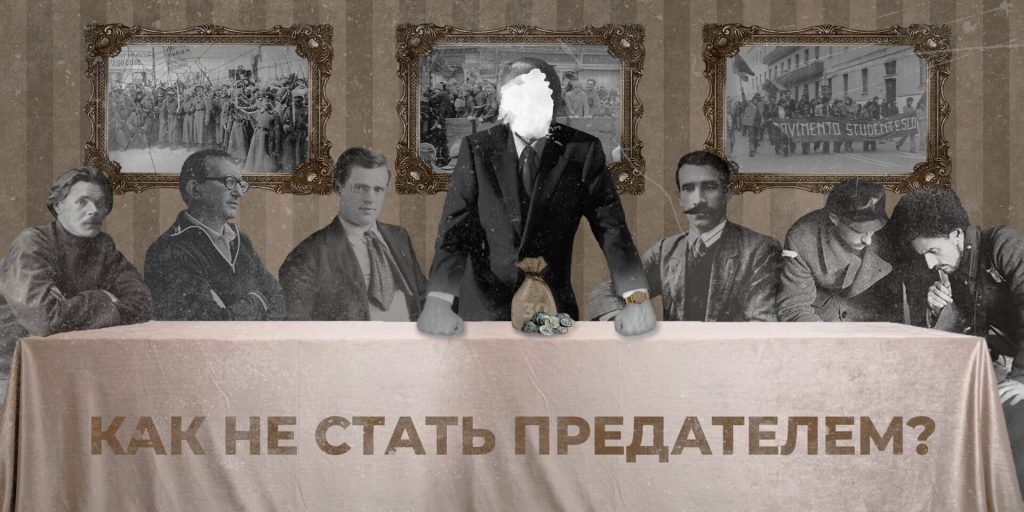
MTSC Editor’s Introduction
Continuing with our decision to open our website to publishing guest essays, we are honored to publish a translation of “How Not to Become a Traitor” by Nikolai Belkin. We have chosen to republish this text because it does a good job of explaining the ways in which even dedicated comrades and members of the masses can be pulled away by bourgeois ideologies, like romanticism/neo-romanticism, if they do not have a firm grounding in Marxism, particularly dialectical materialism. Jack London is one of many American artists who’ve gained notoriety for espousing radical ideas, for whom this critique is just as relevant, such as John Steinbeck, or Upton Sinclair; arguably, the most famous literary traitor is British ‘socialist’ George Orwell.
The original article can be found here. Linking the Lenin Crew website is not an endorsement of everything they have written and their permission to republish is not an endorsement of everything that we have written.
How Not to Become a Traitor
Those who have been in the leftist movement for a long time have seen yesterday’s comrades leave it more than once. They leave for philistinism1 and everyday routine or, worse, for the side of anti-communists. In connection with current international events, there have been many cases of outright betrayal of the communist cause in recent years. And the general background does not play in our favor: the labor movement in Russia has been stagnating for more than a decade, and no one has yet created a capable communist party. So the question posed in the title is not at all idle.
To answer it, this author decided to turn to examples from history. Let’s take two well-known socialists, major cultural figures, and try to trace how they came to betray the interests of the working class in their time.
How Did Jack London Become a Traitor?
Jack London remains one of the most famous American socialists in the world of fiction literature. He is widely known in Russia, as his works were published in huge print runs during the Soviet era. Soviet publishers rightly emphasized the romantic protest against capitalism in his works.
As vivid and romantically grandiose as his socialist literature was, his departure from politics, his disappointment in socialism, and the reactionary turn his thinking took at the end of his career remained equally vague. We [Lenin Crew – BPS] have previously published two articles analyzing his best works, but this particular aspect was not covered in sufficient detail.
Jack London is mainly known as the author of romantic stories, Martin Eden, and socialist articles. The People of the Abyss is a report on the English working class, The Sea-Wolf is a critique of Nietzscheanism2, and The Iron Heel is a dystopia about monopolistic capitalism — all of these works are distinctly socialist. Therefore, it is worth explaining what the dark side of his work consisted of.
London was inconsistent in his views on the world and society. His spontaneous worldview sometimes accommodated contradictory ideas. The same Jack London wrote The Mutiny of the Elsinore, a story that unironically extols the blue-blooded aristocrats who subdue the rebellious rabble of the ship’s crew. He would write a series of stories about inferior ‘yellow’ peoples, the Chinese and Japanese, who threatened civilization, and would glorify the domination of whites over the black aborigines of the Pacific islands and the Indians of North America. He would also put words in the mouths of his characters in the spirit of ideas about the “white man’s burden,” that white Europeans are compelled to bring civilization to other parts of the world and dominate underdeveloped peoples. Take, for example, these lines:
I knew augustness and pride as I gazed – pride that my eyes were blue, like his; that my skin was blond, like his; that my place was aft with him, and with the Samurai, in the high place of government and command. I nearly wept with the chill of pride that was akin to awe and that tingled and bristled along my spinal column and in my brain. As for the rest-the weaklings and the rejected, and the dark-pigmented things, the half-castes, the mongrel-bloods, and the dregs of long-conquered races-how could they count? Lord! Lord! For ten thousand generations and centuries we had stamped upon their faces and enslaved them to the toil of our will.3
Here, the writer refers to the captain of the ship Elsinore by a moniker of Samurai, thereby emphasizing his aristocratic nature.
Of course, it is worth noting that London often wrote simply what would be popular in order to earn money: he needed not only to make a living, but also to pay off his debts. He was under pressure from the public, who did not approve a better part of his views, as well as from editors and censors. One might be tempted to attribute some of this—for instance, his vague generalizations about the upper class—to such pressures. Yet the core issue lay elsewhere. London, alas, was an open racist and never strayed from his racist views. In his works, you will find no irony or ridicule of such views: the author is quite serious.
The writer, who in his time opposed imperialism, and supported the first Russian revolution, and the Mexican revolution (recall the short story “The Mexican” from 1911), became a war correspondent in 1914 and wrote favorable articles about the US intervention in Mexico. At first, he remained indifferent to the outbreak of the First World War, but nevertheless later advocated for the United States to enter it.4
The same “socialist” Jack London would write the novel The Valley of The Moon, in which he depicts a worker who successfully escapes from the capitalist factory hell to a blissful farming life, thereby calling on people to “return to the land” and flee capitalism, rather than fighting for a better future. He would also write the novel The Little Lady of the Big House about the intelligent aristocracy living a luxurious life on a large estate. The plot would be based exclusively on a love triangle, and London would deliberately avoid social themes — and it was this novel that the author would call his best work.
After the release of the rather mediocre adventure book Burning Daylight, written purely for financial gain and devoid of social criticism, the writer even won the approval of the bourgeois press: “… Jack London who no longer desires to preach his very amusing radicalism, but who is willing to come back to his power as a storyteller … It reads well as a book, and its author may be forgiven some recent failures for its sake.”5
At the end of his life, in 1916, Jack London left the Socialist Party of America. The socialists no longer considered him a comrade: possessing untold wealth, London spent it on buying land, expensive hobbies, and building a mansion out of marble and precious woods, but not on helping the labor movement.6
Of course, it is worth noting here that socialists in the United States at that time officially renounced the violent overthrowing of the government in favor of reformism7 and economism8, which provoked protests from London. However, the writer himself did not fight for the revitalization of the socialist movement or the creation of a new party; nor did he help radical movements outside America. He replaced his communist positions and view of the world through the prism of class struggle with abstract left-wing humanism9. Whereas he had previously advocated critical realism in literature, reflecting the harsh reality of the lives of the working masses, he now moved away from this, in both his statements and his books.
Thus, in 1915, in the introductory article to Upton Sinclair’s book The Call for Justice, he wrote that it was necessary to ‘understand’ the surrounding world and make a spiritual choice in favor of “a higher civilization that will exposit itself in terms of love and service and brotherhood.” For this “… makes toward unselfishness. Unselfishness inevitably connotes service. And service is the solution of the entire vexatious problem of man.”10
At the end of his life, London squandered the enormous wealth that had fallen into his lap, building a luxurious mansion on his own land in California and abusing alcohol. In the end, he allegedly committed suicide by taking a lethal dose of medication.
How can we explain the twists and turns of his fate?
In the preface to the Soviet Complete Works of London, his reactionary turn was explained by the weakness of the labor movement in the United States, the absence of a strong party in the country, and the strong influence of bourgeois ideology in it11. Overall, these observations are correct, but they are too abstract and insufficient. They do not explain how a passionate socialist writer could turn into a drunken philistine writing vulgar conservative stories on a luxurious ranch. Yes, American reality itself was conducive to petty-bourgeois12 sentiments prevailing in the U.S. labor movement, which ultimately took hold of our writer. But it is impossible to attribute everything to objective factors.
Let us take a closer look at what kind of socialist Jack London was from the very beginning. After all, his reactionary turn was not abrupt at all: he carried elements of such views throughout his entire life. And therein lay the root of the writer’s troubles: he could not help but change his views during periods of rise and fall of the labour movement, could not resist the ideology of small property owners who filled the United States at that time, since he himself was a terrible eclectic.
Having turned to autobiographical motifs many times, he never fully reflected on the peculiarities of his formation, his past. In his famous article “What Life Means to Me” and other works, he sketches a picture of his life in broad strokes and concludes that he has returned to the working class from which he came. In fact, he is being disingenuous: these works were, among other things, propaganda, and it would be rash to say anything ambiguous in them. Let us try to imagine in more detail the writer’s existence that shaped his worldview.
London was not so much an artist of the working class, as Soviet propaganda portrayed him, but rather a marginalized artist who denounced the social injustice he himself had experienced. Unfortunately, the writer was never able to shake off what he had learned during those years on the margins of society.
He began his life in the countryside, on his adoptive father’s farm; his family was constantly in need of money. He then grew up on the outskirts of Oakland, a suburb of San Francisco, where he was raised by the streets. His mother did not have a proper job, only earning a living by conducting paid spiritualist séances. In his youth, he worked briefly at a canning factory, from which he ran away to join a gang. After that, he changed jobs many times, worked as a hired sailor, and finally ended up begging, wandering around the country. All his life, he was accustomed to adventurism: living for the moment, taking risks, relying only on himself, surviving as an aggressive loner:
…London always relied on its own experience in everything and trusted only its own knowledge and ideas. This applied not only to philosophy, political economy, sociology, etc., but also to other aspects of knowledge, in particular medicine.13
Because of this attitude, he ignored doctors and self-medicated, diagnosing himself and prescribing his own medication based on what he had read in Freud and Jung. He was acutely aware of his poverty, and for a long time his dominant motive was to achieve personal wealth. When London became rich, he began to get involved in financial ventures; now he was constantly in huge debt, having made it his principle to deny himself nothing.
London studied chaotically throughout his life. As a child, he constantly moved with his parents, changing schools; he got most of his education from the Oakland Public Library and from books that he read spontaneously throughout his life. The sources of the writer’s worldview were the positivist14 Herbert Spencer and the irrationalist Friedrich Nietzsche — and life itself pushed him to assimilate precisely these ideologemes.
Of course, Jack London rejected their most reactionary ideas. He condemned Nietzscheanism in his novel The Sea-Wolf, which depicts the downfall of an individualist who steps on others to get ahead and justifies his actions by “the laws of nature”, as well as in Martin Eden, in which a gifted young man, living by the ideology of an “aristocrat of the spirit” also justifying himself by “the laws of nature” and fleeing from society, loses the meaning of life in the world of capitalism.
And yet this proved insufficient.
Reactionary Philosophy and Romantic Aesthetics
One should not overestimate London’s condemnation of his former views: it was rather superficial. London realized the value of society, became imbued with compassion for ordinary workers, and accepted socialist ideas aesthetically… But he continued to think mainly within the old paradigm.
Thus, Jack London believed that inequality between men and women was natural and normal, advocated a conservative family structure, and justified all this through biological laws and instincts (according to London, jealousy is a trait of female nature). For example, in his work The Little Lady of the Big House, the author constantly draws parallels between the instincts of wild horses and men. And this was not only the case in London’s literature: he treated his wife accordingly, calling her “a child who must be taken care of” [This phrasing appears to be a paraphrase of London’s frequently expressed paternalistic attitude toward Chairman Kittredge London, evident in his personal correspondence. See, for example, his letters from 1903. – BPS], did not see her as his equal, and did not consider it necessary to solve family problems together with her.15
London wrote this too:
It is a profound foolishness, a cosmic trick and quip, to the contemplative eye of the philosopher—yes, and of the futurist. But when one forsakes such intellectual flesh-pots and becomes mere human and male human, in short, a lover, then all he may do, and which is what he cannot help doing, is to yield to the compulsions of being and throw both his arms around love and hold it closer to him than is his own heart close to him. This is the summit of his life, and of man’s life.16
In general, the London learned to reduce social phenomena to biological ones from the positivist Spencer. He considered himself a follower of “Social Darwinism”17, although he interpreted it in his own way. This is also the source of the writer’s ideas about the natural inequality of people from different countries and continents, which are found in many of his works.
Even in London’s most socialist work, The Iron Heel, which foreshadows the fascist threat to the labor movement, the main character, the exemplary revolutionary Ernest Everhard, is inclined towards conservative morality. He is an organiser and propagandist, but does not consider it necessary to work with his wife’s worldview. He sees no problem in the fact that his spouse remains a believer in God and the immortality of the soul, that she explains the uniqueness of personality precisely by this, and laughs at talk of the influence of heredity and environment. Ernest simply calls her a “lovely dualist” [here, the article’s author references mind-body dualism. Ernest does not refer to Avis as a dualist explicitly. – BPS]; Christian socialism and his wife’s humanism are enough for him.18 From information about the writer’s personal life, we know that the image of this couple was modelled on his relationship with his second wife, who did not share his political interests at all.
However, positivist reductionism was not the writer’s only problem. His views on life, spontaneously formed by his marginal youth and individualistic, purely intellectual work, found expression in an irrational “philosophy of life”, in Nietzscheanism. And the fact that London at one time renounced his reverence for Nietzsche himself did not lead him to abandon existentialism in his worldview.
One could even say that the artistic style in which Jack London worked — neo-romanticism — became the unchanging foundation of his worldview.
Romanticism as a philosophical and aesthetic movement emerged during the relatively early days of capitalism in the period of the Great French Revolution as a reaction to the unsightly aspects of bourgeois life. However, in criticizing capitalism, the first generation of Romantics began to aestheticize the medieval order.
Over time, the Romantics’ criticism of capitalism developed into a full-fledged system of views. Soviet philosopher Mikhail F. Ovsyannikov noted:
…Romanticism is not just a specific aesthetic theory, it is, to a certain extent, a whole worldview that has spread in different countries…19
In essence, these aesthetic views became the forerunners of existentialism in philosophy. Thus, Friedrich Nietzsche, Søren Kierkegaard, Martin Heidegger, and Albert Camus took a serious interest in Romantic literature as consistent with their views.20
The romantic worldview changed with the development of capitalism and in connection with the peculiarities of the social environment. It and its inherent irrational-existentialist views were manifested in reactionary-conservative teachings, calling for a return to the Middle Ages or the ancient dawn of humanity, and in revolutionary-liberal movements — among those figures who linked romantic criticism with national liberation movements and bourgeois revolutions of the 19th century (remember Byron). At the same time, Romanticism, however it changed, was always just a form behind which lay an eclectic ideology with no strict scientific basis. Because of this, all romantic writers were reactionary in the truest sense of the word: their work was a reaction to capitalism’s suppression of individual freedom, the destruction of small property owners, and the alienation of labor.
By the beginning of the twentieth century, Romanticism had taken on a red hue, but inside it remained the same. By that time, however, such views had lost all their progressiveness. Romantics were involved in the revolutionary wave only insofar as they renounced the irrational and existentialist content of Romanticism. The Polish Marxist philosopher Jerzy Kossak, who studied existentialist revolt, wrote:
… existentialism is not a unified philosophical or literary system. What we mean by this concept consists of a multitude of closely related worldview motifs. The commonality of these motifs is difficult to grasp if we look for it in the realm of pure thought, limiting ourselves to comparing exclusively speculative constructs. It can only be found by examining such constructs against the backdrop of the living conditions from which they arise. It then becomes apparent that these motifs are constituent elements of ideologies that arose on the basis of a critical attitude towards the ruling classes, their morals, ideals and way of life, but which do not lead to real opposition and even weaken it. Such ideologies take various forms. Sometimes it is a longing for the old social order, the nature of which is idealized and embellished. Or it is utopian-reformist hopes for a change in people’s moral outlook without social revolution. It is religious eschatology with a belief that the misfortunes of earthly life will be rewarded in the afterlife. Finally, it is individualistic-nihilistic anarchism, which rejects any culture, or the subjective-voluntaristic protest of a confused individual fleeing from the world.21
Romantic criticism of society is nothing more than an ordinary existentialist anti-capitalist revolt. It is a rebellion born of despair, a rebellion that is radical and inconsistent. Intellectuals are often prone to this worldview, as they are more acutely aware than others of the coarsening of personality due to the inherent features of capitalism: the division of labor, the power of naked self-interest, and heartless “pure profit”.
But the rebellion of romantic criticism is meaningless from a practical point of view. It often degenerates, for example, into escapism, into fleeing from society and aestheticizing something “unspoiled by civilization”. In particular, the romantics of that time often extolled nature, the return of man to his roots, life in the countryside away from the world of capital.
London’s wife noted this characteristic of the writer’s personality: he could never feel satisfied anywhere and “tried during his life all the ways known to man for getting away from an insatiable ego”22. This conservative dream of Jack London is reflected in most of his “northern” stories. For example, here is what he writes in a series about a young American clerk who fled to Alaska from a meaningless life in San Francisco:
A week later, Smoke found himself among the jumbled ranges south of Indian River. On the divide from the Klondike he had abandoned the sled and packed his wolf-dogs. The six big huskies each carried fifty pounds. … At such times San Francisco, The Billow, and O’Hara [the publishing house and its director — N. B.] seemed very far away, lost in a remote past, shadows of dreams that had never happened. He found it hard to believe that he had known any other life than this of the wild, and harder still was it for him to reconcile himself to the fact that he had once dabbled and dawdled in the Bohemian drift of city life. Alone, with no one to talk to, he thought much, and deeply, and simply. He was appalled by the wastage of his city years, by the cheapness, now, of the philosophies of the schools and books, of the clever cynicism of the studio and editorial room, of the cant of the business men in their clubs. They knew neither food, nor sleep, nor health; nor could they ever possibly know the sting of real appetite, the goodly ache of fatigue, nor the rush of mad strong blood that bit like wine through all one’s body as work was done. And all the time this fine, wise, Spartan Northland had been here, and he had never known. What puzzled him was, that, with such intrinsic fitness, he had never heard the slightest calling whisper, had not himself gone forth to seek. But this, too, he solved in time.23
Romantics contrast their own world of ethical, intellectual, and aesthetic values with the grey everyday life under capitalism. Such escapism is rooted in powerlessness, in the inability to change society, and leads the protesting intellectual to the role of a silent observer: “Let society be rotten: I will go my own way, I am outside it!”
Such a person sees the world around them not as a workshop, but as an art gallery. This gives rise to detachment, a sense of unreality, an inability to fully engage with and participate in events, and a rapid cooling of interest when moving from loud slogans to monotonous activity. This was the case with London: the temporary decline of the labor movement led him to apathy and escapism.
Romantic intellectuals protest and crave freedom, but only abstract freedom. This degenerates into individualism, which permeates all their criticism of society. They come to the conclusion that a gifted individual has a value comparable to that of society as a whole. However, there is a positive aspect to this: it is precisely why romantics (in the spirit of humanism, albeit abstract) are concerned that the human personality is not developed under capitalism and is very poorly valued.
The world of capitalism is rejected by romantics and declared prosaically dull. But they have no clear understanding of what kind of world should be created in its place. Their rejection of reality is purely formal; their protest against the bourgeois world does not go beyond aesthetic rebellion. Romantics are repulsed by the philistinism, prosiness24, narrow-mindedness and crudeness of the lives of ordinary workers, and the alienation and meaninglessness of the existence of the masses. They are outraged by the vulgarity, dullness and routine of capitalist businessmen, that is, the most obvious manifestations of self-interest and profit-seeking. This is what they despise and want to eradicate.
But how do they perceive these phenomena? They accuse people of prioritizing everyday material interests over cultural ones, of passivity, of an inability to feel and think deeply, of an inability to appreciate subtle aesthetics. In fact, they accuse ordinary people of not being bourgeois intellectuals!
The socio-philosophical theory of the Romantics is critical of the people of the capitalist world, and the external manifestations of the problems of capitalism are correctly noted here. But this social movement is incapable of reflecting the progressive features of life, showing ways to correct reality, or identifying social trends leading to a new social order. Therefore, their criticism of capitalism remains only a contemptuous denunciation of a society torn apart by material inequality, mixed at best with contemptuous pity.
For comparison, it is worth looking at how much more deeply Karl Marx examined the same problem of the capitalist division of labor, pointing to the historical nature of its emergence (and therefore its finiteness):
The collective labourer, formed by the combination of a number of detail labourers, is the machinery specially characteristic of the manufacturing period. The various operations that are performed in turns by the producer of a commodity, and coalesce one with another during the progress of production, lay claim to him in various ways. In one operation he must exert more strength, in another more skill, in another more attention; and the same individual does not possess all these qualities in an equal degree. After Manufacture has once separated, made independent, and isolated the various operations, the labourers are divided, classified, and grouped according to their predominating qualities. If their natural endowments are, on the one hand, the foundation on which the division of labour is built up, on the other hand, Manufacture, once introduced, develops in them new powers that are by nature fitted only for limited and special functions. The collective labourer now possesses, in an equal degree of excellence, all the qualities requisite for production, and expends them in the most economical manner, by exclusively employing all his organs, consisting of particular labourers, or groups of labourers, in performing their special functions. The one-sidedness and the deficiencies of the detail labourer become perfections when he is a part of the collective labourer.25
The division of labor is only a prerequisite for alienation. Marx writes more precisely and deeply about human alienation itself elsewhere, telling us about the ideology of a society torn apart by material inequality, which is hidden here behind the guise of “political economy”:
He [the political economist/the capitalist – BPS] turns the worker into an insensible being lacking all needs, just as he changes his activity into a pure abstraction from all activity. To him, therefore, every luxury of the worker seems to be reprehensible, and everything that goes beyond the most abstract need – be it in the realm of passive enjoyment, or a manifestation of activity – seems to him a luxury. Political economy, this science of wealth, is therefore simultaneously the science of renunciation, of want, of saving and it actually reaches the point where it spares man the need of either fresh air or physical exercise. This science of marvellous industry is simultaneously the science of asceticism, and its true ideal is the ascetic but extortionate miser and the ascetic but productive slave. Its moral ideal is the worker who takes part of his wages to the savings-bank, and it has even found ready-made a servile art which embodies this pet idea: it has been presented, bathed in sentimentality, on the stage. Thus political economy – despite its worldly and voluptuous appearance – is a true moral science, the most moral of all the sciences. Self-renunciation, the renunciation of life and of all human needs, is its principal thesis. The less you eat, drink and buy books; the less you go to the theatre, the dance hall, the public house; the less you think, love, theorise, sing, paint, fence, etc., the more you save – the greater becomes your treasure which neither moths nor rust will devour – your capital. The less you are, the less you express your own life, the more you have, i.e., the greater is your alienated life, the greater is the store of your estranged being. Everything which the political economist takes from you in life and in humanity, he replaces for you in money and in wealth; and all the things which you cannot do, your money can do. It can eat and, drink, go to the dance hall and the theatre; it can travel, it can appropriate art, learning, the treasures of the past, political power – all this it can appropriate for you – it can buy all this: it is true endowment. Yet being all this, it wants to do nothing but create itself, buy itself; for everything else is after all its servant, and when I have the master I have the servant and do not need his servant. All passions and all activity must therefore be submerged in avarice. The worker may only have enough for him to want to live, and may only want to live in order to have that.26
In such a society, one really has to sacrifice the very essence of life in order to survive. However, romantics cannot understand the reasons for the stinginess of the bourgeoisie or the foolish one-sidedness of the working class. They believe that nothing prevents each individual from expressing their will, exercising their freedom, becoming intelligent and developed, and they blame people for not doing all this.
Many neo-romantics at the beginning of the last century fell into the quagmire of decadence. Consciously or not, they leaned towards agnosticism and irrational self-knowledge, which they defined as mysterious, mystical, otherworldly, and incomprehensible to the practical mind of the average person. Jerzy Kossak described the existentialist motifs in the worldview that prevailed among the masses in the twentieth century as follows:
…the fact is that the protest of thought against the moral consequences of capitalism does not in itself restore broken social ties or create new ones; this applies especially to emotional, often anti-intellectual protest, which merely confirms the emptiness of this world. The destruction of old values, coupled with the inability to find new ones, forces people to shut themselves off in a world of lonely emotions and sensations, a world of lonely joys, worries and aspirations. People who protested in this way against the evils of social life failed to overcome bourgeois individualism and selfishness. They merely changed its form, leaving its content untouched. This applies to those who recognized only the “freedom of the Self”, “self-reflection”, and those who sought only the satisfaction of their own fleeting desires in life.27
Romantics embodied the tendency towards irrationalism in philosophical and aesthetic thought. They attach central importance in life to inspiration, élan vital, intuition, and do not particularly strive for painstaking work or clarification of the causes of phenomena. In the dichotomy between the emotional and the rational, the former is more important to them, and this gives rise to an unfortunate opposition between these manifestations of human life. For them, fiery imagination and free play of fantasy are superior to systems of argument, and logic yields to enthusiasm. Their credo in life is impulsiveness, spontaneous passion, and self-affirmation in creative acts — necessarily sincere — as if only in this sensuality does a person reveal themselves, thereby gaining freedom from alienation.
Here we can recall Jack London’s extreme individualistic adventurism, his admission that he lives by indulging all his impulses. In the book The Cruise of the Snark, created from his travel notes, he wrote:
The ultimate word is I LIKE. It lies beneath philosophy, and is twined about the heart of life. When philosophy has maundered ponderously for a month, telling the individual what he must do, the individual says, in an instant, “I LIKE,” and does something else, and philosophy goes glimmering. It is I LIKE that makes the drunkard drink and the martyr wear a hair shirt; that makes one man a reveler and another man an anchorite; that makes one man pursue fame, another gold, another love, and another God. Philosophy is very often a man’s way of explaining his own I LIKE. But to return to the Snark, and why I, for one, want to journey in her around the world. The things I like constitute my set of values. The thing I like most of all is personal achievement—not achievement for the world’s applause, but achievement for my own delight.28
But how can we explain the fact that the writer’s worldview combined seemingly contradictory scientific positivism and irrational existentialism?
In fact, there is nothing surprising in their mixture, just as there is nothing surprising in the fact that London, a romantic and eclectic figure with a marginal past, revered both Nietzsche and Spencer equally. In essence, these are two sides of the same subjective idealism: “subjective irrationalism has always had a hidden ally in the form of its antipode, pseudo-objective positivism.”29
Both of these trends took shape in the first half of the 19th century, along with the crisis of bourgeois philosophy. The reactionary turn in philosophical thought was linked to the collapse of the classical systems of idealism and materialism (Hegel, Schelling, Feuerbach), as well as to the fact that the results obtained by consistent science pointed to the correctness of dialectical materialism and the necessity of socialism. In bourgeois society, there was a demand for useful, practically oriented knowledge, but not as systematic and consistent as before, in order to close the path to a theoretical transition to socialism.
To this we can add the atmosphere of absurdity and irregularity generated by the anarchy of capitalist production, the swings of supply and demand, which with each crisis throw workers out onto the streets, as well as the fact that scientific progress and the fruits of human labor, on which everyone had pinned their hopes, once again turned against the masses themselves (an example being the rise in unemployment as a result of improvements in machinery). Intellectuals, unable to comprehend the events taking place in a materialistic way, came to the conclusion that the world is beyond human understanding and that everything is absurd. Jack London lived and grew up in this context. He absorbed these sentiments.
Both positivism and irrationalism stem from human sensations and consciousness as the basis of a worldview. For the supporters of the former, there is nothing but human sensations, and for the supporters of the latter, nothing exists or has meaning except the flow of existence — a person’s experience of their own life. It’s just that positivism is more focused on technical, logical, and scientific aspects, while irrationalism, in one form or another of existentialism, has always been oriented towards issues of social philosophy, values, the meaning of life, and so on.
Thus, Jack London was a socialist in his political sympathies, but a romantic in his aesthetic worldview and, most importantly, a subjective idealist in his philosophical views. He was imbued with Social Darwinism and racism from positivist writers, and irrationalism from Nietzsche and his ilk. All this was superimposed on his unreflective development in marginal conditions.
From Philosophy to Politics
Jack London became a socialist in the wake of spontaneous anti-capitalist protests. Hence his inconsistency and irrationality. It is no coincidence that in the book The Iron Heel, the socialist party is depicted as fighting not in the direction of a mass working-class movement, but that of individual terror and secret subversive, conspiratorial activities by intellectuals. It is no coincidence that in his “Revolution” essay, the writer sees no difference between Marxists and other socialists, lumping them all into one camp and even citing the Russian Socialist Revolutionaries with their tactics of individual terror as a positive example.
It is also no coincidence that his understanding of economics was eclectic. For example, in the aforementioned work The Iron Heel, we find phrases such as: “By the joint effort of capital and labor … value was added”; “Labor and capital having produced this [value], now proceed to divide it”30. The writer does not fully understand the process of capital reproduction and therefore explains it in a confused manner. He does not mention that the capitalist’s expenditure on fixed capital is the fruit of past labor, already embodied and transformed into value. Nor does he point out that value is always the fruit of labor, and surplus value is the fruit of surplus labor, that all value is created by workers, while the capitalist, even if he organizes production himself, merely appropriates the product of someone else’s labor. And yet he considered this work to be his contribution to propaganda through fiction!
It is precisely in relation to rebels such as Jack London that the phrase beloved of the right wing is true: “Anyone who was not a socialist in their youth has no heart, but anyone who did not become a conservative in their maturity has no brain“. London naturally cooled towards his political enthusiasm, burned out when the labor movement temporarily quietened down, unable to find support within his own views to continue fighting and resisting the hostile environment. Ironically, the romantic writer, who hated the bourgeois philistines, unknowingly joined their ranks.
The lack of an adequate worldview turned the once sincere socialist, lecturer-propagandist, and most prominent of the left-wing writers of the United States in the early twentieth century into a reactionary philistine. He ceased to support the labor movement financially, shut down his activities within it, and began to write literary works that were ideologically hostile to socialism. Jack London’s philosophical and worldview eclecticism led to both his personal downfall and his political betrayal of communism in practice.
It cannot be said that he was hopelessly doomed to such an end. He could well have turned to systematic self-education and studied Marxism, scrupulously examined philosophy, and seen the contradictions in his worldview and in the anti-scientific systems he adhered to. He could have reflected on his life, on the peculiarities of his character…
Of course, all this is somewhat naive and hypothetical. But in any case, the tragic fate of the socialist writer should be a lesson for us, young communists, if we want to remain faithful to the cause of liberating humanity.
Nevertheless, Jack London’s case is the rule, not the exception. Take, for example, the great Russian writer Maxim Gorky.
Maxim Gorky, the renowned fellow traveler
In Russia, he is known as the fiery “herald of the revolution”. During the Soviet era, he was portrayed as a staunch revolutionary who came from the masses, spoke their language, experienced all the hardships of life and exposed them in his revolutionary prose, fighting for communism both through his literary work and through his work in the Bolshevik Party. It must be acknowledged that such a role model was indeed needed in the difficult 1930s and 1940s. However, one must realize how far this image diverges from reality.
His and London’s biographies are similar. Both came from relatively poor backgrounds, both had marginalized youth, wandered around the country, and eked out a living with odd jobs. Both suffered their way to creativity, to the position of intellectuals. From the very beginning of their creative careers, both joined the global trend of romantic writers. Both participated in the socialist movement.
It is interesting that London himself spoke very highly of Gorky after learning about his work Foma Gordeyev. But it is telling what exactly struck London in this work about Russian life. He writes:
… Gorky, the Bitter One, is essentially a Russian in his grasp on the facts of life and in his treatment. All the Russian self-analysis and insistent introspection are his. And, like all his brother Russians, ardent, passionate protest impregnates his work. There is a purpose to it. He writes because he has something to say which the world should hear. From that clenched fist of his, light and airy romances, pretty and sweet and beguiling, do not flow, but realities–yes, big and brutal and repulsive, but real. <…> He raises the cry of the miserable and the despised, and in a masterly arraignment of commercialism, protests against social conditions, against the grinding of the faces of the poor and weak, and the self-pollution of the rich and strong, in their mad lust for place and power. It is to be doubted strongly if the average bourgeois, smug and fat and prosperous, can understand this man Foma Gordyeeff. The rebellion in his blood is something to which their own does not thrill.31
London positively notes Gorky’s realism. But what excites him most here is the desperate protest against bourgeois vulgarity and mercantilism, written sharply and realistically, and Foma Gordeev’s search for the meaning of life.
Gorky really managed to capture the uniqueness of that era, when the young bourgeoisie of the era of primitive accumulation was fighting against feudal lawlessness in Russia, when the newly formed proletariat, which immediately concentrated on large enterprises, experienced the oppression of two hostile classes at once, but was still unable to rise to mass and organized struggle. However, the protest of the heroes of his early works is existential. Here is an example from the monologue of the poor satirist Yezhov about the masters of life:
The self-satisfied man is a tumor in the breast of society. He crams himself with paltry truths and scraps of stuffy wisdom, and is like a lumber-room where a stingy housewife keeps all sorts of trash that neither she nor anyone else can use. If you touch such a man, if you open the door leading into him, you are enveloped in fumes of decay – a stream of putrefaction comes pouring into the air you breathe. And these miserable creatures are called strong men, men of principle and conviction. And no one cares to remark that their convictions are merely trousers with which they cover the nakedness of their souls. The words ‘Temperance and Tranquility’ are written on their low foreheads in shining letters. False words! Rub their foreheads with a strong hand, and you will see the true words: ‘Narrowness and Stupidity.’ 32
At this time, Gorky was still a socialist of the populist persuasion, sympathizing with the Socialist Revolutionaries. He himself did not yet know exactly what kind of society he wanted, but he became a vivid exponent of spontaneous anti-capitalist rebellion. Later, during the 1905 revolution, he would break with the Socialist Revolutionaries, join the Social Democrats, and even become interested in Marxism.
However, Gorky, like London, was eclectic and absorbed the same trends in reactionary philosophy that were circulating in Europe: positivism and irrationalism. He tried to combine Nietzsche’s existentialist motifs, second-wave positivism, and his own naive philosophizing.
Gorky sharply diverged from Marxism during his period of enthusiasm for Empirio-Criticism. He became a teacher and sponsor-organizer of the so-called Capri Party School. These were courses for revolutionary émigrés from Russia, held to improve their propaganda skills; it was also assumed that the school’s students would spread the knowledge they had acquired among Russian underground activists when they returned illegally to their homeland. The school was run by a faction of the RSDLP that shared Bogdanov’s ideas about supplementing Marxism with positivism. The school’s leaders were also distinguished by their “Recallists” (Otzovists), that is, they were supporters of the idea of a radical break with all legal methods of struggle in Russia, the recall of Social Democrats from the State Duma, and the concentration of efforts exclusively on underground work and the preparation of new armed uprisings.
Lenin shared neither the philosophical nor political views of these people; moreover, he subjected them to harsh criticism. He was particularly critical of the anti-Marxist philosophical views of the “Caprists”. Unfortunately, even after reading Lenin’s book Materialism and Empirio-Criticism, Gorky did not understand Marxism and did not change his philosophical views. This is how he commented on the book in a letter to Bogdanov:
I received Lenin’s book, started reading it, and, with anguish, threw it the hell away. Such insolence! Not to mention that even to me, a layman, his philosophical digressions are reminiscent, strange as it may seem, of Sharapov and Yarmorkin, with their amazing knowledge of everything under the sun. What makes the strongest impression is the tone of the book — a hooligan tone! And so, this is how they speak to the proletariat, and this is how they educate people of the “new type”, the “creators of a new culture”. When the statement “I am a Marxist!” sounds like “I am Rurikovich!” — I do not believe in Marxist socialism, I do not believe it! And in this cry of orthodoxy, I hear the same notes of despair and doom that are so loud in Vekhi and similar tombstone lamentations. All these people who cry out to the city and the world, “I am a Marxist”, “I am a proletarian”, and immediately afterwards sit on the heads of their neighbors, spitting in their faces, are as repulsive to me as any boyars; each of them is, for me, a “misanthrope entertaining his own fantasy”, as Leskov called them. A person is worthless if they do not have a living awareness of their connection with other people, if they are ready to sacrifice their sense of camaraderie for their own self-love. Lenin is like that in his book. His dispute “about the truth” is not for the sake of its triumph, but only to prove: “I am a Marxist! I am the best Marxist!”. As a good practitioner, he is a terrible conservative. “Truth is immutable” is a necessary position for all practitioners, and if you tell them that all truth is relative, they will go mad, for they cannot help but feel the ground shaking beneath their feet. But one can rage conscientiously — Lenin did not succeed in this. In his book, he is an enraged publicist, but not a philosopher: he stands before me as a sharply defined individualist, guarding above all those habits of thought that have shaped his “self” in a certain way — and forever! A hopeless man. Probably, in practice, he will now be even worse. In general, his work evokes countless sad thoughts — it is sloppy, clumsy, and talentless.33
Moreover, Gorky even tried to prevent the publication of Lenin’s book. He used his influence and wrote to Pyatnitsky, one of the organizers of the “Znanie” publishing house, insisting in his letter that Materialism and Empirio-Criticism should not be published. After that, the publishing house rejected the book.
In 1908, Maxim Gorky published the novel A Confession, in which he promoted the ideas of god-building. In his opinion, a new religion could instill collectivism, humanism, and the desire for a better society in people — even though Gorky himself was an atheist. He believed that the popular conception of god was imbued with democratism. Even in articles devoted to the Jewish question, where, incidentally, he speaks positively of the socialists with a touch of Jewish nationalism from the “Bund” organization, he writes:
…they gave Christians their religion, and now they are the most prominent bearers and interpreters of the new religion, that of socialism, for however one views socialism — from a theoretical or philosophical point of view — it contains within itself the powerful spirit and flame of religion.34
Lenin fiercely criticized these ideas. The debates were very long, continuing even into 1913. Lenin wrote that Gorky, when discussing the concept of God, viewed it ahistorically, in a Crusoesque manner, that is, as the same for every era and every class. The propaganda of god-building, in Lenin’s words, could only awaken the base feelings of the uneducated masses, justifying their own servile and dirty traits. He criticised the construction of God by demonstrating the complete incompatibility of these views with science. In addition, he tried to show that the philosophical and worldview basis of the views that had taken hold of Gorky was incompatible with the progressive views of the Marxists:
It is untrue that god is the complex of ideas which awaken and organize social feelings. That is Bogdanov idealism, which suppresses the material origin of ideas. God is (in history and in real life) first of all the complex of ideas generated by the brutish subjection of man both by external nature and by the class yoke—ideas which consolidate that subjection, lull to sleep the class struggle. There was a time in history when, in spite of such an origin and such a real meaning of the idea of god, the struggle of democracy and of the proletariat went on in the form of a struggle of one religious idea against another. But that time, too, is long past.
Nowadays, both in Europe and in Russia, any, even the most refined and best-intentioned defense or justification of the idea of god is a justification of reaction. Your entire definition is reactionary and bourgeois, through and through. God = the complex of ideas which “awaken and organize social feelings, having as their object to link the individual with society and to bridle zoological individualism.”
Why is this reactionary? Because it falsely colors the idea of “bridling” zoology preached by priests and feudals. In reality, “zoological individualism” was bridled not by the idea of god, it was bridled both by the primitive herd and the primitive community.35
In 1917, Gorky, in conversation with Blok, expressed himself in the spirit of panpsychism:
… I prefer to imagine man as a machine that transforms so-called “dead matter” into psychic energy and will one day, in the immeasurably distant future, transform the whole world into pure psychic energy. (…) For there will be nothing but thought; everything else will disappear, transformed into pure thought; (…) I allow myself to think that someday all the “matter” absorbed by humans will be transformed by the brain into a single energy — psychic energy. It will find harmony within itself and freeze in self-contemplation — in the contemplation of the infinitely diverse creative possibilities hidden within it.36
Once again, philosophy gets intertwined with politics. After the October Revolution, Gorky opposed the Bolsheviks, defending bourgeois freedoms and declaring that the socialist revolution was premature. Based on his worldview, as well as the circumstances of his life as an intellectual who had been marginalized in his youth, he was most concerned about the intelligentsia of the former Russian Empire: writers, cultural figures, including obvious enemies of the proletariat such as the conservative Rozanov and liberals. He often begged the authorities to let these people emigrate or to provide them with food rations or apartments. He asked that some be housed in the House of Arts of the People’s Commissariat for Education, a mansion on the Moyka River that had become a dormitory for cultural figures, where all residents were supported at the state’s expense. As an example, thanks to Gorky’s patronage, Alexander Grin, a romantic counter-revolutionary writer, ended up there.
If, for Gorky, the purpose of a person was to think and bring “dead matter” to life, as he said to Blok, then it is quite understandable why all intellectuals were valuable to him, regardless of their views. He wrote to Lenin in 1919:
A learned person should now be more valuable to us than ever before, for it is he, and he alone, who is capable of enriching the country with new intellectual energy, developing it, and creating the army of technicians we need in all areas of the human mind’s struggle with dead matter.
…do not confuse the politicizing intelligentsia with the creators of intellectual, scientific energy.37
For a Bolshevik, this opinion is, you must agree, overly abstract. But even before that, Lenin wrote the following to Gorky:
Often, both on Capri and afterwards, I told you: You allow yourself to be surrounded by the worst elements of the bourgeois intelligentsia and succumb to their whining. You hear and listen to the howl of hundreds of intellectuals over the “terrible” arrest for a few weeks, but the voice of the masses, the millions, the workers and peasants, whom Denikin, Kolchak, Lianozov, Rodzyanko, the Krasnaya Gorka (and other Cadet) plotters are threatening—this voice you do not hear and do not listen to. I quite understand, I quite fully understand, that in this way one can write oneself not only into saying that “the Reds are just as much enemies of the people as the Whites” (the fighters for the overthrow of the capitalists and landowners are just as much enemies of the people as the landowners and capitalists), but also into a belief in the merciful god or our Father the Tsar. I fully understand. No really, you will go under unless you tear yourself out of this environment of bourgeois intellectuals! With all my heart I wish that you do this quickly.38
Of course, Lenin advocated cooperation with the former bourgeois intelligentsia (and even believed that these people should be paid more for their work than ordinary workers). But only with those representatives who agreed to bring knowledge to the people and serve the republic. Putting the welfare of the intelligentsia above the interests of the revolution and the working people, as Gorky did, is a completely different matter. Especially if this intelligentsia is reactionary, participates in conspiracies against Soviet power, and agitates for the continuation of the imperialist war in its journalism.
As a result, Maxim Gorky, rejecting the cruelty of revolutionary terror, ceased to engage in the organization of the masses, the strengthening of the party, and the spread of communist ideology. When all party members underwent re-registration in 1919, he refused to participate, effectively leaving the party — and Gorky never rejoined it. The thoughts that led Maxim Gorky to temporarily break with the Bolsheviks can be found in his 1918 book Untimely Thoughts. In addition to highlighting truly important issues—barbarism, lawlessness, cultural decline, hunger, and vigilante justice—Gorky engages in philosophical musings about the violation of the humanistic and cultural ideals of the revolution:
No, the proletariat is neither magnanimous nor just, even though the revolution was supposed to establish all possible justice in the country. The proletariat has not conquered; an internecine slaughter is taking place all over the country; hundreds and thousands of people are killing one another. In Pravda, insane people are egging us: “Smite the bourgeois, smite the Kaledinites!” But the bourgeois and the Kaledinites are just ordinary peasant-soldiers and worker-soldiers; it is they who are being wiped out and it is they who are shooting the Red Guards.
If only the internecine war consisted of Lenin’s seizing the petty bourgeois hair of Milyukov and of Milyukov’s pulling the luxuriant curls of Lenin, then-
All right! Go to it, Masters!
However, it is not the masters but the serfs who are fighting, and there is no reason to believe that this fight will end soon
But what surprises and frightens me most of all is that the revolution carries no sign of man’s spiritual rebirth, is not making people more honest, more straightforward, and is not increasing their sense of their own value and the moral evaluation of their work.39
Unfortunately, Gorky’s spiritual outpourings found an audience, confusing those who were undecided and wavering in their support for the revolution and the Bolsheviks. Maxim Gorky continued to participate in public work until 1921, but then emigrated. Abroad, he initially came to terms with the turn the revolution had taken and sought to explain it, in particular by discussing the backwardness and cruelty of the peasantry, which had left its mark on Russian events. But when the trials of the Socialist Revolutionaries began in the USSR, he again wrote an open letter to the European press condemning the Bolsheviks, which Lenin rightly called treason.
Of course, the Bolsheviks could not completely disown Gorky. He was needed by the Soviet government as an influential political and cultural figure with a worldwide reputation. Starting in 1922, the USSR paid him 100,000 German marks a month. Officially, this money was considered a fee for the publication of Gorky’s books in the Soviet Union, but in reality it was a kind of payment for loyalty, for Gorky to side with the USSR in his works and public speeches. Gorky spent these considerable funds on helping the émigré intelligentsia and on his own projects, such as the foreign magazine Beseda, through which he attempted to unite Soviet and émigré writers.
Maxim Gorky continued to maintain a very isolated political position for a long time and did not speak out publicly against the White émigrés. His first such statement would not come until 1928, when he visited the USSR for the first time. He would not return permanently until 1933, three years before his death. By then, the most difficult years of civil war, devastation, and NEP compromises were over. Gorky returned to a country where the education of the masses was already bearing fruit, where it was possible to work in the field of culture — and where 130,000 rubles a month would be allocated to support his family and his hobbies, while a worker’s salary was about 300 rubles.40 He would take part in the organization of the Writers’ Union, write articles, and finish some of his works. However, there is no reason to believe that the writer had by that time taken up the position of Marxism: it was still the same confused utopian socialism mixed with humanism and fragments of proletarian ideology.
I do not mean to say that Maxim Gorky was a bad writer. He was a remarkable artist of the neo-romanticism and, later, the realism movement, who reflected many of the distinctive features of Russia under the old regime and sang the praises of the achievements of the people rising up and carrying out the revolution. But the truth is that Gorky was never a consistent Marxist: he was an eclectic and poor thinker, which naturally led him to political betrayal on more than one occasion.
In my opinion, Leon Trotsky gave the most balanced assessment of Maxim Gorky’s life and work in his obituary for the writer. He notes that this “great writer and great man” initially emerged not as an artist of the socialist revolution, but as a singer of the rejected masses: “From below, from the slums, Gorky brought to the Russian intelligentsia the romantic spirit of daring—the courage of people who have nothing to lose.” “Gorky”, writes Trotsky, “tried to approach the proletarian revolution in his realism, but was too connected to the intelligentsia, its problems, and its spiritual quests.”
Deepest within this extraordinary autodidact lay a reverence for culture: his first, belated introduction to it seemed to burn him for life. Gorky lacked both a genuine school of thought and historical intuition to establish the necessary distance between himself and culture and thus gain the necessary freedom of critical assessment. His attitude toward culture always remained somewhat fetishistic and idolatrous.
Needless to say, the late writer is now portrayed in Moscow as an uncompromising revolutionary and staunch Bolshevik. All this is bureaucratic lies! Gorky came close to Bolshevism around 1905, along with a whole layer of democratic fellow travelers. Together with them, he distanced himself from the Bolsheviks, without, however, losing his personal and friendly ties with them. He joined the party, apparently, only during the Soviet Thermidor period41. His hostility toward the Bolsheviks during the October Revolution and the Civil War, as well as his rapprochement with the Thermidorian bureaucracy, show all too clearly that Gorky was never a revolutionary. But he was a satellite of the revolution, bound to it by an irresistible law of gravity, revolving around it his entire life.42
In Conclusion
Romanticism was the worldview of people rebelling against capitalism. It was—and remains.
The ranks of the modern left are constantly being replenished by people who are motivated only by an abstract rejection of capitalist reality, left-wing romantics like Gorky and London. The author of this article grew up with such views.
These people often do not understand the essence of communist ideas and therefore disagree with LC when we say that every communist must properly master Marxist science. Many of them think that “abstract” Marxist philosophy is not particularly important. They believe that simply being an ideological socialist is enough.
No, comrades, communists need to work out their worldview. And this should be done not in times of turmoil, but in advance, on the shore. It would be criminally reckless not to fully understand one’s own ideas. After all, in the name of these ideas, every communist is going to not only embark on a dangerous undertaking himself, but also involve his comrades in the organization and even outsiders. All this places a huge responsibility on each of us.
Think about it: you have to promote, you have to work with people, you have to develop Marxist journalism! You will need to constantly analyze the situation yourself, work out solutions yourself, and find suitable methods of agitation yourself. Simple ideology is not enough here: without knowledge of the subject, it is easy to get confused and discredit Marxism, or even start engaging in anti-Marxist activities.
No matter how ardent a party member an individual may be, their experience is always limited, and their knowledge of specific issues is narrow and cannot encompass all of humanity’s achievements. Without Marxist theory — in particular, philosophy — a communist cannot overcome their narrow-mindedness and the narrowness of their spontaneously formed views. Philosophy allows a person to rework their personal experience and knowledge into a system based on universal laws and to extract fragments of erroneous ideologies from their worldview. It is critically important for a Marxist to understand what has influenced their development and to what extent, and how this may affect their work in the organization.
But how can you understand how well the various elements of your worldview correspond to each other (and to Marxism), and whether, for example, your ethical positions contradict your political ones?
To do this, every communist must understand themselves and trace the path of their development, identify the characteristics of their personality, so that they can clearly understand what can be expected of them and understand what negative aspects they need to overcome.
At the same time, no amount of reflection will help a “Marxist” who does not understand Marxist theory to assess how much his character and views influence his party life and political position. Without serious preliminary preparation, a communist is doomed to inconsistency and risks sooner or later betraying his political convictions, like Jack London, who never rethought his marginal past. Due to the lack of a consistent Marxist worldview, the journalistic and political activities of London — and many other socialist writers — at a certain stage turned into one big betrayal of the working class. In doing so, they not only ruined their own fate, but also led astray the masses who trusted them. Such is the connection between philosophy and politics.
Of course, studying theory is not a panacea for political delusions, but it is still an effective remedy that should not be neglected.
***
But romanticism is not only about the leftist movement. It is also about the masses.
Irrational, spontaneous anti-capitalist rebellions by the masses have accompanied the entire history of capitalism up to the present day. At the same time, spontaneous resistance to capitalism can equally likely don conservative, liberal, or red coats. Communists must understand the patterns of anti-capitalist rebellion, be able to apply Marxist analysis to current sociological data, and answer the question of how to work with spontaneous resistance movements in the interests of the communist movement. Instead, illiterate leftists fall in line behind the masses with their inconsistent demands and ideas. Then the tragedy of betrayal occurs.
This was the case, for example, with the “New Left” in Europe in the 1960s. At that time, they all considered themselves “socialists”. However, researcher Richard Vinen cites the following data from CIA analytical documents:
Loosely dubbed the New Left, they have little in common except for their indebtedness to several prominent writers such as American sociologist C. Wright Mills, Hegelian philosopher Herbert Marcuse, and the late negro psychiatrist Frantz Fanon … (The term New Left, itself, has little meaning – except as a device to distinguish between today’s young radicals and the Communist-Socialist factions of the interwar period. It is taken to mean an amalgam of disparate, amorphous local groups of uncertain or changing leadership and eclectic programmes) … an amalgam of anarchism, utopian socialism, and overriding dedication to social involvement.43
The headless intellectuals, the “opinion leaders” who hid behind “neo-Marxism” and loud anti-capitalist slogans, were unable to cope with the political storm that had swept in and became weather vanes, turning in the direction of the mood of the masses.
The tragedy of the anti-capitalist intelligentsia, led by various eclectic socialists and “Marxists”, was that their cultural and political “revolution” did not require changes in the base. The reforms did not bring freedom; capitalism was able to absorb, monetize, and vulgarize all the initiatives, all the sexual revolutions, and all the radical slogans. Even some of the student leaders betrayed their former views and integrated into the bourgeois system: into the academic environment, public politics, and simply into a prosperous life.44
Of course, not all of them became traitors. Most of the activists of that left-wing protest “did not fit into the market”. Having lost their prestigious places in universities and received unofficial “wolf’s tickets”, having given up their careers, having served prison terms, having experienced the collapse of all their hopes and aspirations, most of the protesters found themselves crushed by the continued existence of capitalism. It is quite tragic that, according to current data, decades after that defeat, most of the students who participated in the movement live in poverty — in contrast to those who supported the government and retained their prestigious education, careers, and status. They staked everything on their movement and failed because they did not see the utopian, anti-scientific basis of the organizations that called themselves “revolutionary” and the ideological shortcomings of their own leaders.
These left-wing activists suffered defeat largely because they followed the contradictory ideas of “unorthodox Marxism”, which did not reflect reality. They were unable to navigate the events unfolding around them and made fatal mistakes. For example, some French Maoist communists began to adhere to deeply anti-Marxist tactics: supporting archaic production, artisans, and small shopkeepers, and organizing non-profit cooperative enterprises. They believed that this was how they were fighting capitalism. But in the 1970s and 1980s, these enterprises were swept away by progress, and their organizers were crushed and demoralized. Sacrifices were made, lives were ruined, but all to no avail. The same thing happened to a large number of French left-wing syndicalists — sincere, desperate, but doomed to repeat the Owen’s fate and that of the Russian Narodniks’ communes.
Theoretical infirmness always leads to an inability to manage events and navigate them, to pandering to spontaneity and even the darkest desires of the masses, and, ultimately, to betrayal.
- Philistine: “A person who is uniformed about a special area of knowledge but to assumes they’re well versed in it and spout off about it anyways.” ↩︎
- The beliefs of Friedrich Nietzche, particularly his ideas of “master morality” vs “slave morality”, and his rejection of a “morality-for-all”, insisting that exceptional individuals (an “Übermensch”) should follow their own inner law. ↩︎
- The Mutiny of The Elsinore by Jack London, Chapter XXX. ↩︎
- В. Н. Богословский (Bogoslovsky). Джек Лондон. Издательство «Просвещение». 238 страниц; 1964 г. Глава «Последний этап» [Here, Bogoslovsky is referencing “Jack London and His Times” (see below). – BPS] ↩︎
- Jack London and His Times – An Unconventional Biography by Joan London, New York, 1939, p. 331. ↩︎
- А. Танасейчук. Джек Лондон. Одиночное плавание. Жизнь замечательных людей. Москва, изд. «Молодая гвардия», 2017. Стр. 313. ↩︎
- The belief that capitalism can be reformed into socialism or that exploitation can be reformed out of capitalism. ↩︎
- An opportunist trend which worshipped spontaneity and led to the lagging behind or tailing of the masses, leading to the neglect of or even opposition to political struggle. “It meant the emergence of a separate trend, which is usually designated as Economism (in the broad sense of the word), the principal feature of which is its incomprehension, even defence, of lagging, i.e., as we have explained, the lagging of the conscious leaders behind the spontaneous awakening of the masses. The characteristic features of this trend express themselves in the following: with respect to principles, in a vulgarisation of Marxism and in helplessness in the face of modern “criticism”, that up-to-date species of opportunism; with respect to politics, in the striving to restrict political agitation and political struggle or to reduce them to petty activities, in the failure to understand that unless Social-Democrats take the leadership of the general democratic movement in their own hands, they will never be able to overthrow the autocracy; with respect to tactics, in utter instability (last spring Rabocheye Dyelo stood in amazement before the “new” question of terror, and only six months later, after considerable wavering and, as always, dragging along at the tail end of the movement, did it express itself against terror, in a very ambiguous resolution); and with respect to organisation, in the failure to understand that the mass character of the movement does not diminish, but increases, our obligation to establish a strong and centralised organisation of revolutionaries capable of leading the preparatory struggle, every unexpected outbreak, and, finally, the decisive assault.” A Talk with Defenders of Economism by VI Lenin ↩︎
- A bourgeois philosophical trend centered on human interests or values; especially: a rejection of supernaturalism and stressing an individual’s dignity and worth and capacity for self-realization through reason. For a more thorough elaboration see Handbook of Philosophy pages 52-53. ↩︎
- Jack London: American Rebel by Philip S Foner, p. 526-527. ↩︎
- Джек Лондон. Полное собрание сочинений в 14 томах. 1961 год. Том 1. Стр 4. ↩︎
- In this context, individualist sentiments, tending to identify with the interests of the bourgeoisie proper (I.e. buying into the “American Dream” or “pulling yourself up by your bootstraps”). ↩︎
- А. Танасейчук. Джек Лондон. Одиночное плавание. Жизнь замечательных людей. Москва, изд. «Молодая гвардия», 2017. Стр. 31, 37–38, 307. ↩︎
- A bourgeois idealist, empiricist philosophy that denies the possibility of knowing the inner connections and relations of things in the world, and denies the capability of philosophy as a means of knowing and changing the objective world. For a more thorough elaboration see Handbook of Philosophy page 96. ↩︎
- А. Танасейчук. Джек Лондон. Одиночное плавание. Жизнь замечательных людей. Москва, изд. «Молодая гвардия», 2017. Стр. 293, 294 ↩︎
- The Mutiny of The Elsinore by Jack London, Chapter XLIX. ↩︎
- The theory that the struggle for existence and natural selection also govern social development. ↩︎
- The Iron Heel by Jack London, Chapter V. ↩︎
- Овсянников М. Ф. История эстетической мысли. ↩︎
- Ежи Коссак. Экзистенциализм в философии и литературе. [PL: Jerzy Kossak: Egzystencjalizm w filozofii i literaturze – BPS] Издательство политической литературы. Москва, 1980. Стр. 49; А. С. Богомолов, Ю. К. Мельвиль, И. С. Нарский. Современная буржуазная философия, Москва, изд. «Высшая школа», 1978. Стр. 308, 310–311, 384. ↩︎
- Ежи Коссак. Экзистенциализм в философии и литературе. [PL: Jerzy Kossak: Egzystencjalizm w filozofii i literaturze – BPS] Издательство политической литературы. Москва, 1980. Стр. 18. ↩︎
- The Book of Jack London, Vol. II by Charmian London, Ch. XXXIX, p. 321 ↩︎
- Smoke Bellew by Jack London, Part V ↩︎
- Dullness or tedium, long windedness. ↩︎
- Capital, Vol. I by Karl Marx, Part IV, Ch. 14 “Division of Labour and Manufacture”, Section 3. Progress Publishers, Moscow, USSR, online version retrieved from Marxists Internet Archive. ↩︎
- Economic & Philosophic Manuscripts of 1844 by Karl Marx, Third Manuscript, p. XIV. Progress Publishers, Moscow 1959, retrieved from Marxists Internet Archive. ↩︎
- Ежи Коссак. Экзистенциализм в философии и литературе. [PL: Jerzy Kossak: Egzystencjalizm w filozofii i literaturze – BPS] Издательство политической литературы. Москва, 1980. Стр. 13. ↩︎
- The Cruise of the Snark by Jack London, Ch. I. ↩︎
- Западноевропейская философия XIX века. И. С. Нарский. М. «Высшая школа», 1976. Стр. 532. ↩︎
- The Iron Heel by Jack London, Chapter IX. ↩︎
- Revolution and Other Essays: Foma Gordyeef by Jack London. ↩︎
- Foma Gordeyev by Maxim Gorky. Translated by Margarett Wettlin. Chapter X. Foreign Languages Publishing House, Moscow, USSR, 1950. ↩︎
- М. Горький. Неизданная переписка с Богдановым, Лениным, Сталиным, Зиновьевым, Каменевым, Короленко. Серия «М. Горький. Материалы и исследования», основана в 1989 г. Вып. 5. М.: «Наследие», 1998. Стр. 55. ↩︎
- Горький М. О еврейском народе. Рассказы, публицистика. Иерусалим, 1986 г. ↩︎
- Lenin Collected Works, Progress Publishers, 1976, Moscow, Volume 35, pages 127-129. ↩︎
- Басинский П. В. Горький : Страсти по Максиму. Москва: Издательство «АСТ» : 2018. Стр. 307–308. ↩︎
- М. Горький. Письмо к Ленину, 19 сентября 1919 года. https://doc20vek.ru/node/2186. ↩︎
- Lenin Collected Works, Progress Publishers, 1975, Moscow, Volume 44, pages 283c-285. ↩︎
- Untimely Thoughts: Essays On Revolution, Culture and The Bolsheviks, 1917-1918, Translated from the Russian and with notes by Herman Ermolaev, Yale University Press, New Haven & London, 1968. Ch. 15. ↩︎
- Басинский П. В. Горький : Страсти по Максиму. Москва: Издательство «АСТ» : 2018. ↩︎
- As Maoists, we are also critical of the Soviet Union’s experience, the issues of bureaucracy, and the poor handling of line struggles in the 1930s. However, we do not endorse Trotsky’s thesis of the “Soviet Thermidor.” As we understand it, this is a key point in his “degenerated workers state” analysis of the USSR. We think the allusion to Thermidor is imprecise at best and a very forced comparison with the French Revolution. ↩︎
- Л.Д. Троцкий. О Горьком ↩︎
- The Long ’68. Radical Protest and Its Enemies by Richard Vinen. p.17 (digital edition). Allen Lane, 2018. ↩︎
- The Long ’68. Radical Protest and Its Enemies by Richard Vinen. pp. 243-246 (digital edition). Allen Lane, 2018. ↩︎
 Mount Tai Study Circle