
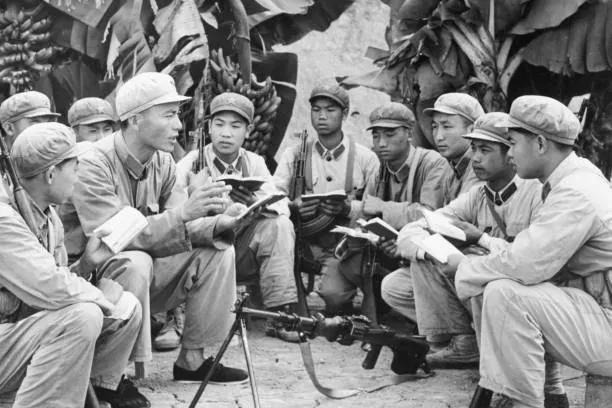
This is an overview of what facilitators typically do when conducting studies.
A brief note about terminology: Members of MTSC are also referred to as participants in the study groups. We use the two terms interchangeably in our documents and will likely move to make this clearer and uniform in the future.
There are two main formats for facilitating a study: the classic format and the open discussion format.
Classic Format
Facilitating a study using the classic format is straightforward, and for the most part sticking to the guide and discussion questions is 80% of what facilitating is. This format is best for the first module and groups primarily made up of beginners, as it helps ease them into Marxism.
Before a study, facilitators should look over the study guide to make sure it is free of errors and has a nice flow. This is also the time to check discussion questions and to clarify expected answers for understanding-based questions. At the start of a study session, facilitators should ask how folks are, how the reading went, and if there are any initial questions or comments before starting the guide. As facilitators read through the guide, they should strive to add their own comments, anecdotes, or elaborate on concepts as opposed to simply reading all the words on the page. That said, sometimes a section is fairly simple and there isn’t much to add, so for the sake of time it is okay to press along to the discussion questions. After each overall concept or section of the guide is completed, it is best practice to take a second to stop and check for comprehension and any new questions or comments. Especially for longer or more difficult studies, this gives an extra chance for folks to chime in. Generally, they’ll want to wait about ten seconds and emphasize that people can still ask questions later on if they think of something.
For the discussion questions, facilitators should clearly ask the question and give ample time for members to think of an answer. Sometimes they can also re-word or rephrase the question to make sure it’s clear. Even though there may be a long period of silence, facilitators are expected to resist the urge to answer their own questions. Instead, they can offer some hints, relate the question back to points that the participants are more familiar with, or ask leading questions. Only after all members have had a chance to answer the discussion question should facilitators feel free to give their own answers.
This process is repeated until the end of the study. Facilitators should aim for studies to be an hour and a half. If discussion is good, or if it’s a denser text, it’s okay to bleed into 2 hours, but any longer than that and facilitators should stop the study at a timely point and pick up at the next session.
If the group doesn’t have a regularly set day and time for meetings, facilitators should ask about scheduling the next meeting at the end of the current one. Then the next section or text for reading should be announced, and the guide should be sent as soon as possible.
Open Discussion Format
Facilitating using the open discussion format doesn’t follow the guides as closely and is better suited for groups made up of people who already have some familiarity with Marxism.
The facilitator will assign the participants to read the study guides as they go through the text and to come to the study session prepared to answer the discussion questions in the study guide, as well as bring their own questions. The majority of the session is be devoted to clarifying misconceptions, answering clarifying questions, and engaging with the discussion questions and participant questions.
The same guidelines for the classic model apply for timing, asking questions, and overall conducting the studies.
Reviews
These are collective assessments of the study group’s understanding. Members are provided the questions on the module in advance and are expected to come prepared to discuss with each other. The facilitators go through the questions in order and give the participants an opportunity to discuss each one. When the group either has consensus or different positions have been shared, the facilitators give feedback. During reviews, what’s primary isn’t to ‘test’ individuals on their knowledge on details or historical facts, but on whether they grasp the fundamental ideas presented during the studies. Afterward, members can elect to proceed to the next module. (Generally, we recommend this if they collectively score at least 75%, but this isn’t a formal rule.) If they are not confident in their understanding then they can either review the texts related to their difficulties again or facilitators can cover supplementary material that may help round out their understanding. On an individual level, participants also assess themselves. If based on the review questions and discussion they do not think they have understood the material well, they can ask for individual studies that go over the material again or supplemental material.
 Mount Tai Study Circle